Toyota to invest $1B+ at Kentucky facility to make new SUV

Toyota (NYSE: TM) will invest $1.3 billion at its flagship Kentucky facility in Georgetown.

The automaker announced Tuesday that the investment will be for future electrification efforts including assembly of an all-new, three-row battery electric sport utility vehicle for the U.S. market, according to a news release.

The project brings the plant’s total investment to nearly $10 billion.

The investment also supports the previously announced future battery electric vehicle (BEV) assembly at Toyota Kentucky. It also adds a battery pack assembly line to the facility, with batteries being supplied by Toyota Battery Manufacturing North Carolina.

“You cannot think of the Bluegrass region and Scott County without thinking of Toyota,” said Kentucky Gov. Andy Beshear in the release. “We are grateful that they continue to invest in our commonwealth and continue to set a standard for high-quality, well-paying jobs for our citizens. Thank you, Toyota for yet another $1 billion-plus investment coming to Kentucky.”

Louisville Business First

UAW union signs majority of Volkswagen AG’s Chattanooga factory workers

The United Auto Workers union says it has signed up the majority of employees at Volkswagen AG’s Tennessee plant, teeing up a high-stakes test of the union’s ability to expand its ranks following its record Detroit contract wins.

In November, the UAW announced an audacious effort to organize 13 automakers’ non-union plants, including Toyota Motor Corp., Tesla Inc., and Nissan Motor Co. facilities. The union, which represents around 265,000 automaker or auto parts employees, is aiming to organize around 150,000 more workers at those 13 firms. VW’s Chattanooga factory is the first of those locations where the union says it’s secured over 50% support. It previously announced signing up more than 30% of employees at Mercedes-Benz Group AG and Hyundai Motor Co. facilities in Alabama.

Under U.S. law, a company can voluntarily recognize and negotiate with a union once a majority of workers have signed union cards, or can refuse to do so unless the group first wins a government-run election. The UAW has said it will seek recognition once it has 70% of a plant signed up.

AL.com

Vehicle parts manufacturer with Tesla ties grabs industrial space north of Austin, plans hiring spree

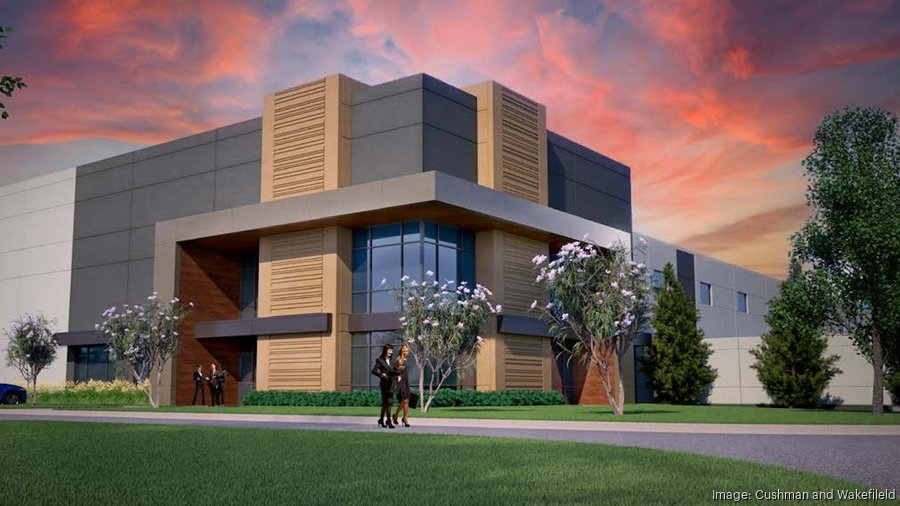
Vehicle parts manufacturer US Farathane Corp., which has a longtime presence in Austin and is a known supplier of Tesla Inc. and other notable vehicle makers, has leased more than 260,000 square feet in a new industrial park that’s set to become one of the largest in the region.

A high-ranking representative for US Farathane confirmed on Feb. 6 that the company plans to move into the bulk of a roughly 410,000-square-foot building at GTX Logistics Park in Georgetown. The representative called the move “imminent” and dependent on the completion of infrastructure at the site. US Farathane plans to employ more than 100 people at the facility.

The Detroit-based company provides injection molding, compression molding and extruded products for the interior and exterior of vehicles. Connecticut-based Atlas Holdings acquired US Farathane in April. The announcement at the time noted its customers included General Motors, Ford, Stellantis, Tesla, Toyota, Honda, Rivian and “other global automotive OEMs and Tier 1 suppliers.”

Austin Business Journal

Rivian to soon reveal R2 crossover EV to be built in Georgia

Rivian, the electric vehicle maker that plans a $5 billion factory east of Atlanta, says it will soon reveal the model it will make in Georgia.

In posts on social media, Rivian said it will reveal the new crossover EV next month. The R2 is a critical vehicle for Rivian as it seeks to broaden its product line to more mass market consumers. Midsized and compact crossovers are some of the most popular vehicles in the U.S.

“This is it. Get ready to meet R2 on March 7th,” Rivian posted on X, formerly known as Twitter.

The site along I-20 in southern Walton and Morgan counties has undergone grading for some time, and the California-based startup is expected to begin vertical construction early this year. The state Department of Transportation is also working on several related road construction projects, including a new freeway interchange.

Atlanta Journal Constitution

Hyundai supplier promises 200 jobs at new coastal Georgia A/C plant

A Korean automotive air-conditioning manufacturer announced Tuesday it will join the fast-growing list of parts suppliers moving to Coastal Georgia to support Hyundai Motor Group’s future electric vehicle factory.

Doowon Climate Control America, Inc., will build a new plant near Metter in Candler County, which is expected to employ 200 workers. The project is estimated to be a $30 million investment.

Gov. Brian Kemp said that Georgia’s expanding EV industry is benefiting rural corners of the state.

“In fiscal year 2023, alone, 82 percent of new jobs created and more than $20 billion of investments went to communities outside the metro Atlanta area,” Kemp said in a news release. “The City of Metter and Candler County are key beneficiaries of that success.”

Founded in 1974, Doowon Group will supply A/C products to both Hyundai and Kia, which operates a factory in West Point. Doowon Group’s new facility will be located in an industrial park near Metter along I-16. Plant production is expected to begin in 2026.

Atlanta Journal Constitution

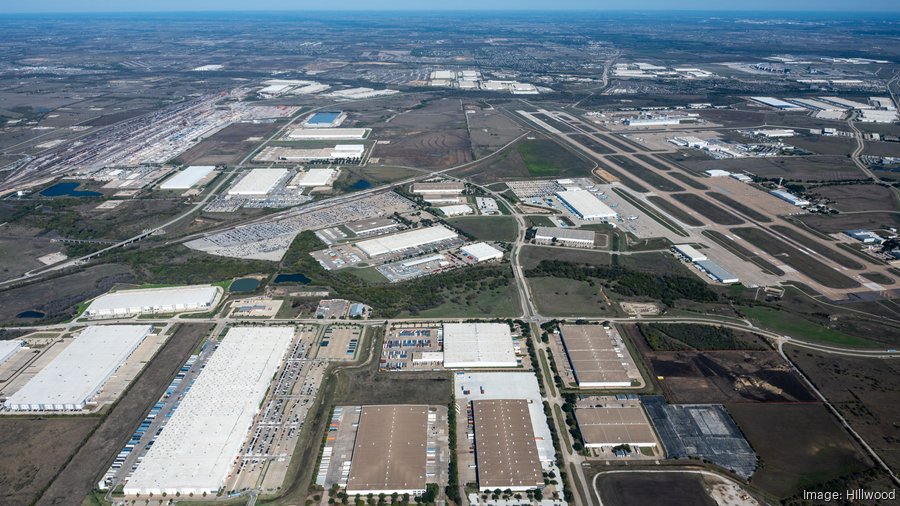
574 companies, 58M square feet, $15B in investment: Hillwood’s AllianceTexas by the numbers

In a state known for largesse, AllianceTexas has produced some truly astounding numbers in the past 30-plus years.

That includes an estimated $119.8 billion in economic impact since 1990, and $9.8 billion in 2023 alone, according to a survey presented March 6 by the project’s master developer, Hillwood Development Company LLC.

AllianceTexas spans 27,000 across — nearly the size of the city of San Francisco in California — and touches nine municipalities along the I-35W corridor, from Fort Worth to Denton, Haslet to Westlake. It also reaches into five independent school districts and two counties.

Below are a few more numbers to mind from the latest economic impact report, which was presented this week to Fort Worth City Council and prepared again by Insight Research Corp., a Dallas-based economic analysis firm.

Dallas Business Journal

Raleigh climbs closer to top spot in Milken’s best performing cities in the U.S.

Raleigh is moving up – again – among the top cities for economic development in the U.S.

The City of Oaks ranks second in Milken Institute’s Best-Performing Cities list for 2024, unveiled Tuesday. Raleigh climbed back into the top 5 last year, placing third, after falling to No. 16 in 2022.

The city has been in the top 20 of the Milken rankings for 12 years in a row.

Austin, Texas, took the No. 1 spot this year while Boise City, Idaho, Salt Lake City and Provo, Utah, round out the top 5. Provo ranked first in 2023.

Continued job and wage growth is what bumped Raleigh up one more spot this year. The city ranks eighth for job growth and sixth for wage growth. Wages increased by 51.9 percent from 2017-2022, according to the report. With that, high-wage jobs have grown by 83 percent since 2017.

Triangle Business Journal

Charlotte makes leap into top 10 on Milken Institute ranking of best-performing cities in U.S.

Charlotte has accomplished a first-time feat, landing among the top 10 in a highly regarded ranking that measures U.S. metro areas on economic performance.

Charlotte cracks that list, put together by California-based nonprofit think tank the Milken Institute, at No. 10 — up 10 spots from No. 20 last year. It marks the first year since the Milken Institute began tracking the rankings in 2012 that Charlotte appears in the top 10, says Maggie Switek, senior director of the nonprofit’s research department and co-author of the report.

“The Charlotte-Concord-Gastonia metro area’s climb in the rankings is largely due to its rapid growth in wages, which has been partially driven by the rebound of Charlotte’s leisure and hospitality industry along with a steady and continued expansion of its high-tech sector,” Switeks tells CBJ via email. “Between 2017 and 2022, workers in the Charlotte metro area experienced a 45% increase in wages, with a 13% wage growth just during 2022.

Charlotte Business Journal