13,000-acre development outside Laredo, Texas set to redefine nation’s busiest port

A 13,000-acre development is taking shape outside Laredo that will deliver thousands of new homes, commercial and industrial space – even an airport.

The project, called Talise, is underway. It will boast a development lifespan about 30 years long and cost just shy of $7 billion.

Talise is a legacy project said Kandy Walker, the property owner, but not one she had intended to develop herself.

“I wanted my children to develop it, not me,” Walker told the Business Journal. “We were just going to get the land ready — but then, things got moving really quickly.”

Walker, whose family has deep roots in Laredo’s ranching history, said the project is also a way to give back to her community.

San Antonio Business Journal

Huge industrial park to rise in Hutto, Texas near Samsung’s growing campus

More than 1 million square feet of warehouse and distribution space is planned in Hutto, not far from Samsung Electronics Co. Ltd.’s sprawling chipmaking plant in nearby Taylor.

Construction is expected to start later this month, according to a June 3 announcement. The project, under a joint venture of Dallas-based Velocis, Ironwood Realty Partners and California-based MBK Industrial Properties, will rise on 118 acres at 2351 Innovation Blvd. at the intersection of State Highway 130 and West U.S. 79, which the Hutto City Council annexed in 2022 and zoned for light industrial use.

The first phase of the project will consist of three speculative industrial buildings totaling about 660,000 square feet. The second phase will total about 667,000 square feet, also across three buildings.

The site of the project is about 10 miles west of Samsung’s growing campus and about 20 miles north of Tesla Inc.’s massive gigafactory in eastern Travis County, both of which have spurred demand in the industrial market as their suppliers expand in the region.

Austin Business Journal

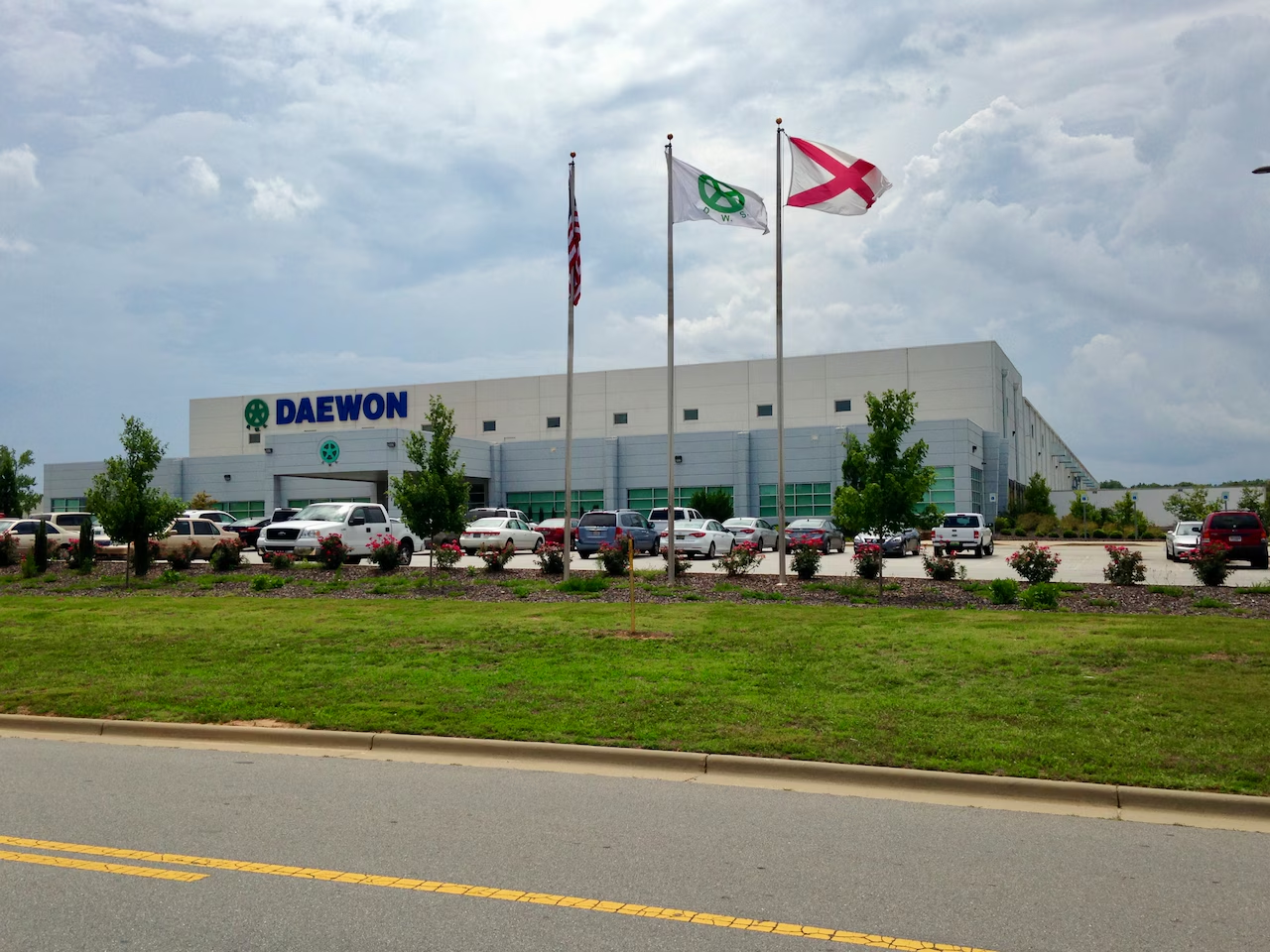
Auto parts supplier Daewon planning $46.2 million expansion in Opelika, Ala. that will create 100 jobs

Auto parts supplier Daewon America, Inc. is planning a $46.2 million expansion to its Opelika facility that will create 100 jobs, the City of Opelika announced Tuesday.

“I believe everything in our local economy starts with a good paying job,” said Opelika Mayor Gary Fuller in a statement announcing the expansion. “That has been my focus since you hired me as your mayor in 2004. Our community has been blessed with over 5,000 new good paying jobs since 2004. This significant additional capital investment by Daewon will result in property tax revenue to benefit Opelika City Schools, East Alabama Health, and Lee County Youth Development Center. There is no question that this has been a team effort with City Council President Eddie Smith and the Opelika City Council, Ronnie Wilson and the Opelika Industrial Development Authority, and John Sweatman and his Economic Development team. They have all played an important role in our continued success.”

AL.com

Report outlines roadmap for transforming Alabama’s Black Belt into leading ecotourism destination

Alabama’s Black Belt has all the ingredients to become a premier ecotourism destination, according to a report produced by a renowned ecotourism expert who conducted a detailed assessment of tourism development potential in the region.

The report, authored by Costas Christ and Associates, and including Beyond Green Travel and the University of Alabama Center for Economic Development, recommends that tourism planning and development in the Black Belt focus on the three pillars of nature, culture and community. It also urges communities throughout the Black Belt to collaborate and work together to foster economic development throughout the region’s 23-county footprint.

“By emphasizing the conservation of nature and protection of cultural and historic sites, along with local community engagement, the Black Belt can become a leading ecotourism destination,” said Christ, who is a former editor and senior director for sustainability for National Geographic and a top travel expert. “The Black Belt is a diamond in the rough. It just needs some polishing.”

Alabama News Center

Exec heading up Ford’s EV plant at BlueOval City departs — for another local project

The tri-venture building a $1.9 billion truck battery facility in North Mississippi has finalized its structure and poached a key local Ford BlueOval City exec as its CEO.

Kel Kearns, formerly the plant manager at the Tennessee Electric Vehicle Center at BlueOval City, will serve as CEO of Amplify Cell Technologies, the name for the tri-venture between Cummins, Daimler Truck, and Paccar.

The project is set to see a battery plant producing differentiated lithium-iron-phosphate (LFP) battery cells in Marshall County. It is projected to bring 2,000 jobs to North Mississippi and was announced earlier this year. It is set to come online in 2027, with room for potential expansion if demand is high.

Cummins spoke to MBJ about the project when its incentive package was approved by the State of Mississippi legislature.

Cummins, Daimler Truck, and Paccar each own 30% of the Amplify Cell venture. The remaining 10% is owned by a technology partner, China-based EVE Energy.

Kearns has been plant manager at Ford’s Tennessee Electric Vehicle Center, which will be its most advanced plant. As the plant prepares to enter the mass hiring and launch phase, it will now need a new leader.

Amplify Cell Technologies is scheduled to break ground this summer. It also keeps Kearns, who spent most of his career hopping around the globe launching car plants for Ford, in the Memphis area for longer. A Ford representative told MBJ that he retired from Ford effective Monday, June 3.

Memphis Business Journal

Second-largest manufacturer in Memphis area closing

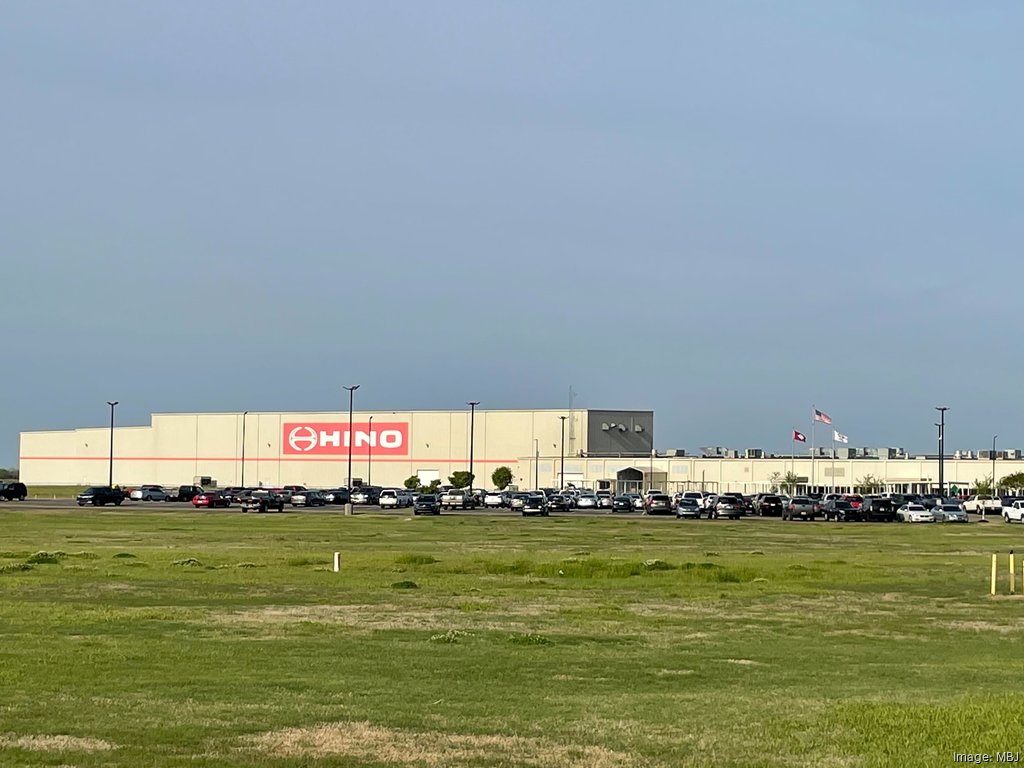
Hino Motors Manufacturing has announced the planned closure of its stamping and component plant in Marion, Arkansas.

The facility employs about 1,300 workers. The closure is expected to take place mid or late 2027, the company said.

Hino Motors Manufacturing U.S.A. Inc. (HMM) is the second-largest manufacturer in the Memphis area, according to MBJ’s list of the largest Memphis-area manufacturers. HMM is a subsidiary of Japanese publicly traded company Hino Motors Ltd., of which Toyota owns a majority stake.

Located at 100 Hino Blvd., just west of the I-40 and I-55 interchange, HMM’s 510,000-square-foot plant produces auto parts — specifically knuckles, suspension components, and axles for Toyota Tundra and Sequoia vehicles; frame side rails for Hino medium-duty trucks; and engine connection rods for Hino diesel engines.

Internationally, Hino Motors’ auto parts business saw a operating loss of $190 million dollars in its fiscal year ending March 31, 2024, according to its announcement of the closure. Companywide, the operating loss was $52 million.

“Regarding the parts business, we have concluded that recovering sustainable profitability is difficult, and thus have decided to withdraw from this business,” the company said in its announcement about the plant closure.

The decision was made at a May 31 board meeting, HMM said.

HMM began production at its Marion facility in 2006 and expanded multiple times over the years.

Memphis Business Journal
Toyota Announces $282 Million Expansion Project in Alabama

Toyota yesterday announced a $282 million investment to expand plant production capabilities in Huntsville, Alabama. The project will create new drivetrain product production lines and more than 350 jobs.

Including this latest investment, the company has put more than $1.7 billion into its Alabama campus. The Huntsville facility is the carmaker’s largest engine producer in North America. The site has some 2,000 employees who assembled more than 770,000 engines last year.

Toyota Alabama supplies engines to seven North American Toyota vehicle plants. The engines are used in the Corolla, Corolla Cross, Highlander, RAV4, Sequoia, Sienna, Tacoma and Tundra.

Alabama’s auto industry’s rapid growth fueled by billions in new investment

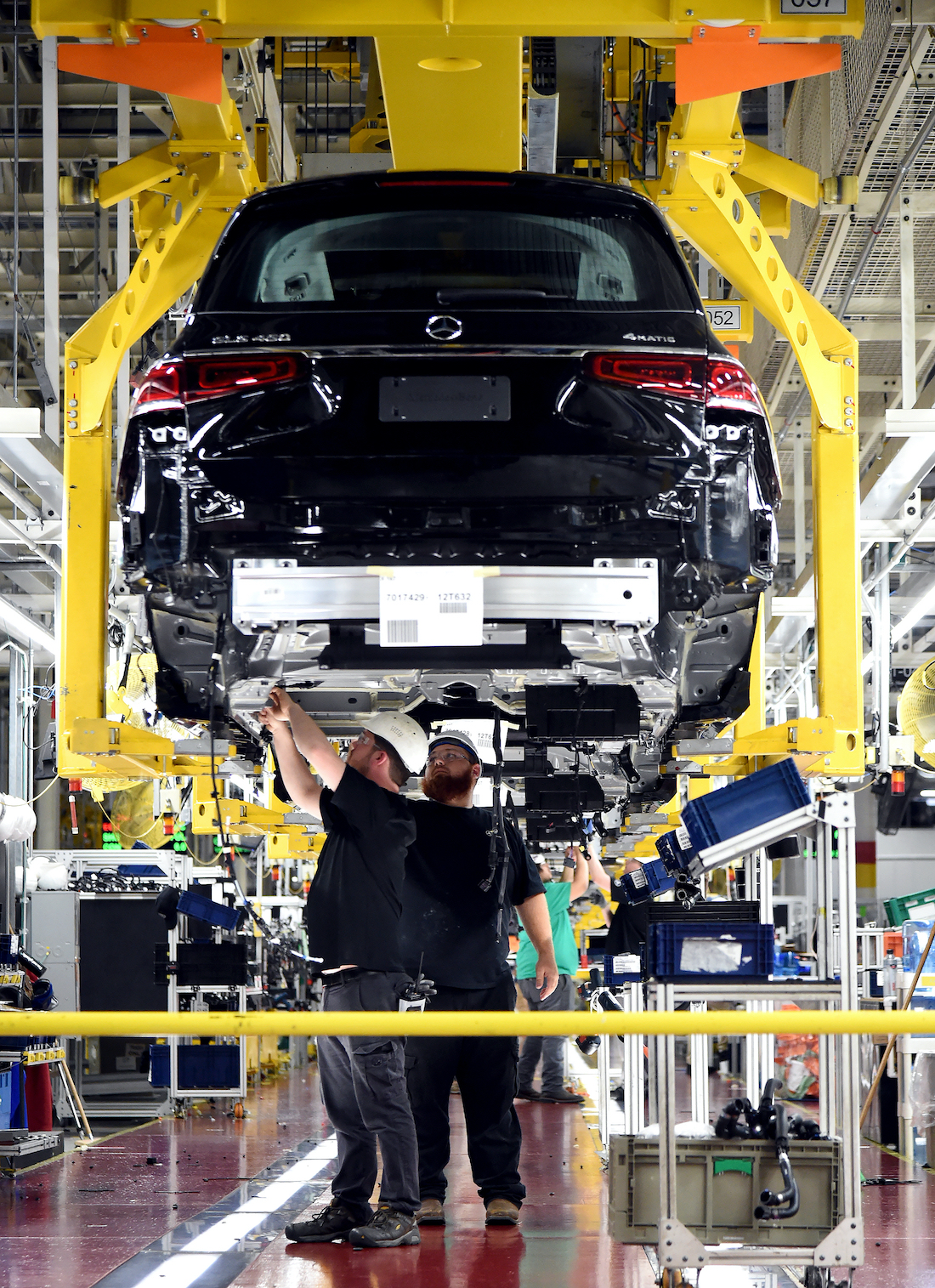
For Alabama’s economic future, the pivotal moment came on Sept. 30, 1993, when executives of Mercedes-Benz arrived in Tuscaloosa with an announcement that shocked the global business community.

In the months leading to that day, a Mercedes team had explored potential sites in at least 30 states as a home for the automaker’s first U.S. manufacturing facility. They came to Alabama that day to announce their decision.

For many, the news was a lightning bolt out of the blue. After all, Alabama had never produced an automobile and barely had any presence in the industry.

But Mercedes found what it wanted in a rolling 900-acre site, lined with pine trees, just outside of Tuscaloosa.

The initial investment back in 1993 was $400 million, with plans for 1,500 workers. The project quickly become much more than that; in fact, it came to represent a dividing line for Alabama.

For many, it became “Before Mercedes” — and “After Mercedes.”

Flash forward to 2023. Mercedes has invested over $7 billion in its Alabama operation through repeated expansions that have seen its workforce in Tuscaloosa County swell to over 6,300 people. Over 4 million vehicles have rolled down its assembly lines.

MadeInAlabama.com