

By Michael C. Randle
Elon Musk told investors in late October that Tesla will be expanding capacity to around 5 million units by 2030 or 2031. The automaker has only made 1.8 million vehicles since October 2025, and is currently on pace for 2.5 million units by this time next year.
With its original Freemont, Calif., assembly plant now closed, Tesla produces vehicles from three plants around the world. They are:
Gigafactory Texas – Austin, Texas
Tesla’s global headquarters, producing the Model Y and Cybertruck (with transitions toward Cybercab production).
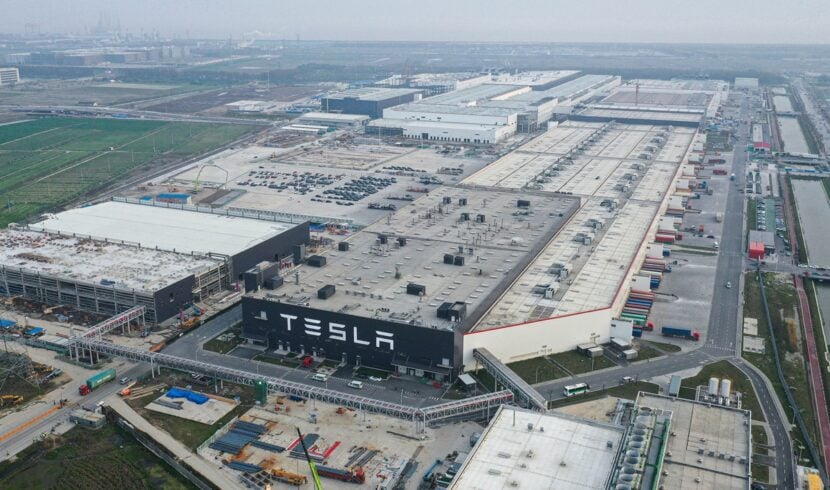
Gigafactory Shanghai – Fengxian District, China
Produces the Model 3 and Model Y for Asian and export markets. The Shanghai facility builds more than half of all Tesla models worldwide.
Gigafactory Berlin-Brandenburg — Grünheide (Mark), Germany
Produces the Model Y for European markets
Doubling production in the next four years would require an expansion that is even a tough go for Tesla, really, any automaker. Tesla CFO Vaibhav Taneja said during the earnings call on October 21, that for the first time ever it has delivered nearly 500,000 vehicles in Q3 worldwide. The company is also enjoying its largest backlog in orders in four years.
With a doubling in production, the supply chain certainly must be the biggest concern. Taneja acknowledged constraints in Tesla’s supply chain, specifically the supply of batteries. Tesla makes its own batteries in Sparks, Nev., and Buffalo, N.Y.
Tesla is expanding its supply chain to the tune of $20 billion, which includes more capacity for Optimus robots and energy generation and storage through production of its batteries. It is also gearing up for its autonomous Cybercab line as it announced in November the end of production for the Cybertruck.
The Tesla conundrum
Given the U.S.-China relations, Tesla faces some big issues regarding an expansion that essentially doubles production in just four years. Musk has discussed spinning off or selling its Chinese plant. The reasons make sense.
For one, about a fifth of Musk-owned companies’ total revenue in fiscal 2025 came from the U.S. government. This, of course, would include SpaceX.
Tesla is the only wholly foreign-owned automaker in China. The other automakers there are in partnership with the Chinese government. In Shanghai, Tesla relies on local Chinese parts. In fact, more than 95 percent of its Chinese-built cars are supplied by parts from over 400 local parts makers.
Combining a major Pentagon contractor with a U.S. company in China that relies on local minerals and machines is walking a fine line. In fact, Musk has kept Chinese-made equipment, suppliers and nationals completely away from its SpaceX work. He has gotten around that in part by lining up mineral supplies from South Korea, including non-Chinese polysilicon, all the while using those same elements produced in China for its Tesla factory in Shanghai.
That being the case, a Pentagon contractor using essentially zero Chinese supply chains – when China produces 90 percent of rare earths – and a U.S.-based automaker using an almost 100 percent Chinese supply chain with the assistance of Chinese goodwill “raises national security alarms in both capitals” of Beijing and D.C., according to IndustryWeek.