
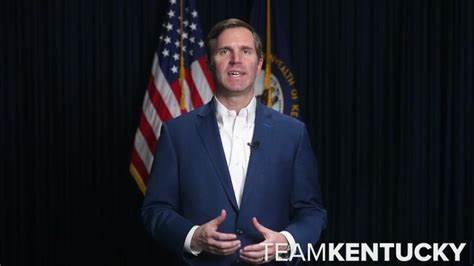
Gov. Beshear: Over $1.5 Million Approved Statewide To Support Training for More Than 6,500 Kentucky Workers

FRANKFORT, Ky. (Feb. 15, 2024) – Today, Gov. Andy Beshear highlighted Kentucky’s continued investment in workforce training initiatives as he announced over $1.5 million in funds and credits have been approved through the Bluegrass State Skills Corp. (BSSC) to assist with the training of over 6,500 Kentucky workers and employees.

“Kentucky’s record-breaking economic success is directly related to the hard-working, skilled individuals that make up the commonwealth’s workforce,” said Gov. Beshear. “Programs like the Bluegrass State Skills Corp. provide the necessary funding to train and support workers across Kentucky. This training will help give employees the tools they need to be successful and keep the commonwealth’s historic economic momentum going.”

Through the BSSC’s Grant-in-Aid and Skills Training Investment Credit programs, over $1.5 million in state support was approved to train and develop 6,543 Kentucky employees across 25 companies.

Included among this month’s approvals was workforce training support for over 1,000 trainees at GE Appliances in Louisville and an additional 684 trainees for Montaplast of North America in Frankfort. Other approvals include 487 trainees at Bluegrass Business Consortium Inc. in Berea, 307 trainees at Bluegrass Training Consortium Inc. in Georgetown, 317 employees at Kentucky Alliance Training Consortium Inc. in Georgetown, 221 trainees at Faurecia Interior Louisville LLC and 200 workers at Lyons Magnus LLC in Walton.

Including this month’s meeting, Gov. Beshear has now announced nearly $15 million in funding through BSSC across 78 projects to train over 28,000 Kentucky workers for fiscal year 2024.

Gov. Beshear previously announced over $10 million in funding for 115 applicants throughout the state to train nearly 35,000 workers for fiscal year 2023. The state also provided over $8.4 million in funds and credits during fiscal year 2022. Those funds assisted with workforce training for more than 35,400 Kentucky employees – the most since 2016.

The Grant-in-Aid and Skills Training Investment Credit programs assist employers throughout the commonwealth. Grant-in-Aid provides cash reimbursements for occupational and skills upgrade training at Kentucky businesses, while the Skills Training Investment Credit offers state income tax credits for companies to offset the costs for approved training programs. Applications for both programs are accepted and considered for approval by the BSSC Board of Directors.

BSSC incentives are available to a range of operations, including manufacturing, agri-business, nonretail service or technology, headquarters operations, state-licensed hospital operations, coal severing and processing, alternative fuel, gasification, renewable energy production and carbon dioxide transmission pipelines.

For more information on BSSC or to apply for workforce training assistance, click here.

Kentucky’s investment in workforce training builds on the best four-year period for economic growth in state history.

Since the beginning of his administration, Gov. Beshear has announced more than 1,000 private-sector new-location and expansion projects totaling over $30 billion in announced investments, creating more than 51,800 jobs. This is the highest investment figure secured during the tenure of any governor in the commonwealth’s history.

The robust job creation has been accompanied by rising wages across the commonwealth. The average incentivized hourly wage in 2022 and 2023 topped $26 in consecutive years for the first time.

Gov. Beshear has announced some of the largest economic development projects in state history, which have solidified Kentucky as the electric vehicle battery production capital of the United States: Ford Motor Co. and SK On’s transformative $5.8 billion, 5,000-job BlueOval SK Battery Park in Hardin County; AESC’s $2 billion, 2,000-job gigafactory project in Warren County; Toyota’s $1.3 billion investment in Scott County; and INFAC North America’s $53 million investment in Taylor County, among others.

The Governor’s administration also secured the largest General Fund budget surplus and Rainy Day Fund, as well as the most jobs filled in state history. Last year, Kentucky set the record for the longest period with the lowest unemployment rates in state history.

Kentucky also secured rating increases from major credit rating agencies Fitch Ratings and S&P Global Ratings, and Moody’s Investors Service upgraded Kentucky’s credit outlook from stable to positive.

Site Selection magazine placed Kentucky first in the South Central region and top 5 nationally in its 2023 Prosperity Cup ranking, which recognizes state-level economic development agencies for their success in landing capital investment projects.

Gov. Beshear announced a “Supply Kentucky” initiative with the goal of boosting job growth, reducing costs and providing more security in the supply chains of our Kentucky companies.

Team Kentucky

Capital One to buy Discover in $35.3B deal

McLean-based Capital One Financial is buying Discover Financial Services for $35.3 billion in an all-stock deal that marks Capital One’s largest ever acquisition, the two credit card giants announced Monday evening.

Under the terms of the acquisition agreement, Discover shareholders will receive 1.0192 Capital One shares for each share of Discover, representing a premium of 26.6% based on a Feb. 16 closing price of $110.49 for Discover shares.

The transaction is expected to close in late 2024 or early 2025, according to a news release. At close, Capital One shareholders will own about 60% of the combined company, and Discover shareholders will hold the remaining approximately 40%. Upon closing, three Discover board members will join Capital One’s board.

Virginia Business

Conecuh Sausage expanding in $58 million Alabama growth project

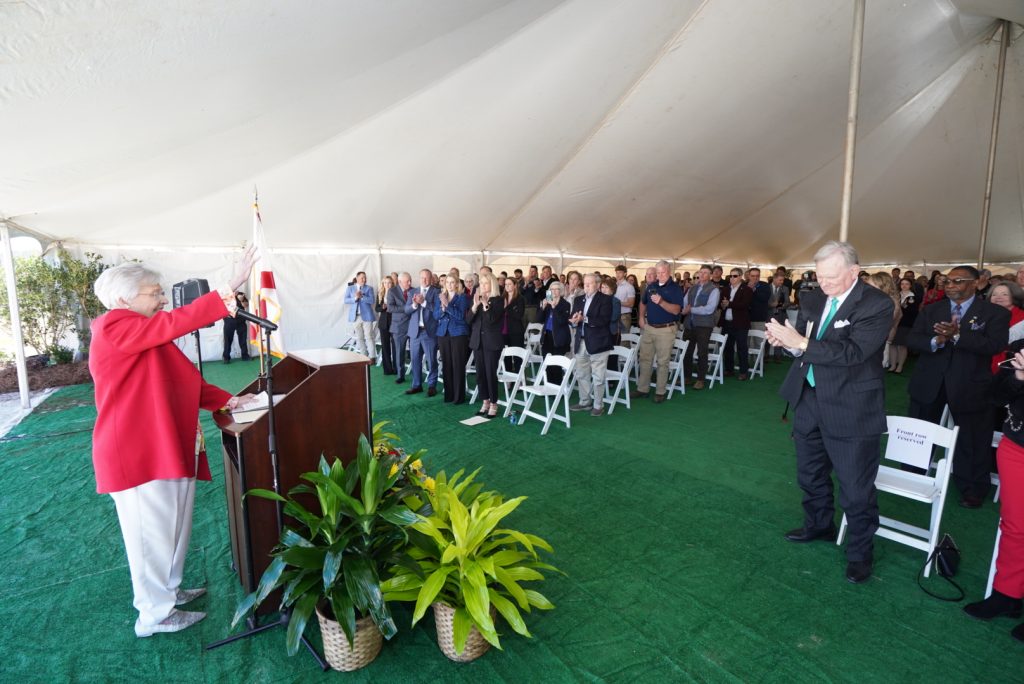
ANDALUSIA, Alabama — Governor Kay Ivey announced today that Conecuh Sausage, an iconic Alabama maker of hickory smoked sausages, plans to invest nearly $58 million to open a second production facility in the state, creating 110 jobs in Andalusia.

Conecuh Sausage was founded in Evergreen in 1947, and the production location in Conecuh County will remain operational as the company expands to meet increasing demand for its products.

“Conecuh Sausage is a landmark homegrown brand, and I am thrilled to see that the company continues to grow and thrive right here in ’Sweet Home Alabama’,” Governor Ivey said.

“This growth project will allow Conecuh Sausage to extend the reach of its brand and put its distinctive Alabama flavors in even more kitchens.”

Conecuh Sausage is a family-owned business that produces high-quality meats with a patented blend of seasonings. Its sausage products are sold directly through the company’s online store and Gift Store as well as through local grocery stores, national retailers and independent distribution companies.

Conecuh Sausage owners John Crum Sessions, president, and his son, John Henry Sessions, said they are making their long-term vision a reality in their quest to satisfy the demand for Conecuh Sausage products.

“We are eager to join the Andalusia community and add jobs and growth to the local economy while remaining in the State of Alabama,” they said in a statement. “We are thrilled with the opportunity to expand our production facilities and increase distribution to serve our loyal customers.”

MAJOR INVESTMENT

As part of the project, the company commits to creating at least 110 new jobs in Andalusia and to investing $57.8 million to construct and equip the new facility in Covington County, according to the Alabama Department of Commerce.

“Conecuh Sausage’s expansion project positions the company for sustained growth while also generating a significant economic impact in the Andalusia area,” said Ellen McNair, Secretary of the Alabama Department of Commerce.

“We’re happy that the company decided to expand its production footprint in South Alabama rather than going to another state,” she added.

After researching multiple expansion locations in the Midwest, Conecuh chose to remain in their home state of Alabama.

“This is an exciting and important day for the City of Andalusia,” Mayor Earl Johnson said. “We have been working for decades to be prepared when a company like Conecuh Sausage was ready to expand here, and we appreciate the Sessions family for their confidence in our community and the investment they are making here.

“I cannot overstate the positive impact this facility and the jobs it will generate will have on our community in the coming years,” Johnson said. “Many people worked very hard to put this project together, and we are appreciative of their efforts.”

LOCAL IMPACT

Other local officials also applauded Conecuh Sausage’s investment plans in Andalusia.

“For years I think that many of us have taken pride in being a next-door neighbor to Conecuh County, the home of Conecuh Sausage.  And now, we are privileged to welcome Conecuh Sausage and the Sessions family into our county,” Covington County Commission Chairman Greg White said. “The County Commission commits to doing everything we can to make this a perfect fit as Conecuh Sausage expands into Covington County.”

“Conecuh Sausage has been a part of our menu for more than 75 years,” added Covington County Economic Development Commission Executive Director Rick Clifton. “We are excited to partner with them in their expansion plans for the future.”

Alabama Department of Commerce

Massive new office skyscrapers going up in Austin, but no one is moving in

Historically, Austin, Texas, is one of the most active office markets in the South, as its tech scene has accelerated dramatically since the 1990s. However, since the pandemic, new office space has been a crap shoot as gobs of Class A space sits empty in so many major markets throughout the country.

For example, metro Atlanta set a record for its vast amount of empty and unwanted office space. It only took three months to break that record in the summer quarter. Nearly 31 percent of all office square footage in metro Atlanta was available for rent at the end of September, according to data from real estate services firm CBRE.

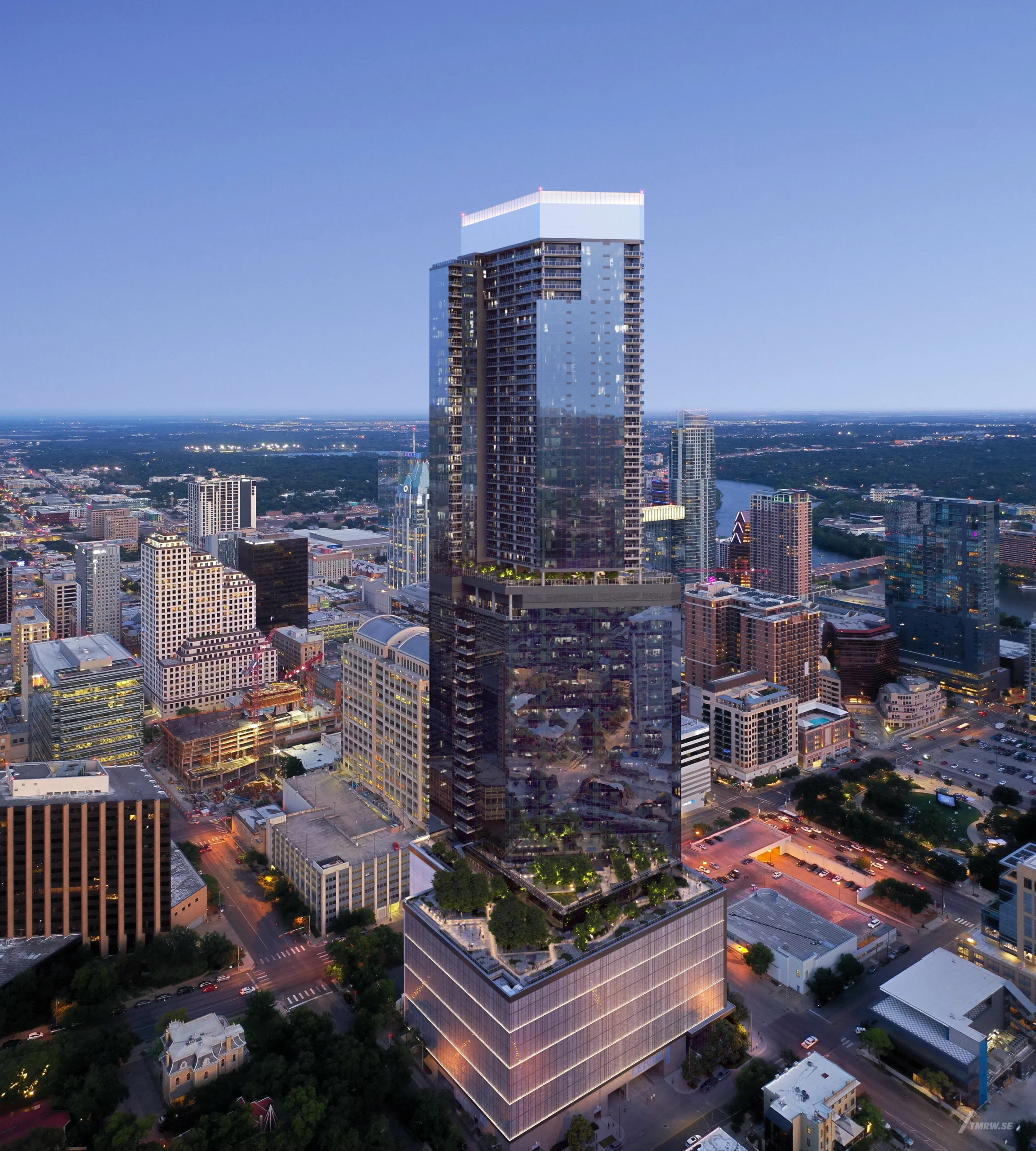
Austin is not immune from the vacancies. One 66-story behemoth known as “Sixth and Guadalupe” is nearing completion, and timing could not be worse. Tech giant Meta signed a lease for all 19 floors of office space as construction was underway in early 2022. When the building opens near the first of the year, all of that space Meta signed up for will be empty.

Meta has shelved its move-in plans and is now attempting to sublease nearly 600,000 square feet of space, 1,626 parking spots, 17 private balconies and a nice green space. As of November, there have been no takers.

In addition, the job search engine, Indeed, has moved into its namesake tower in Austin, however, it has placed 100,000 square feet of downtown office space on the sublease market. Currently, Austin has more space on the sublease market than ever before. 

Lake Charles Methanol Announces Plan for New $3.2 Billion Manufacturing Plant in Southwest Louisiana

WESTLAKE, La. – Lake Charles Methanol II, LLC (LCM) announced plans to invest $3.24 billion to construct a new manufacturing plant that will produce low-carbon intensity methanol and other chemicals at the Port of Lake Charles. The company plans to use advanced auto thermal gas reforming technology and employ carbon capture and secure geologic storage to produce low-carbon hydrogen for conversion to methanol.

If the project moves forward as outlined, the company expects to create 123 direct new jobs in Calcasieu Parish, with an estimated average annual salary of $135,955. LED estimates the project would result in 605 indirect new jobs, for a total of 728 potential new jobs in the Southwest Region. LCM estimates that more than 2,300 construction jobs will be created at the peak of construction.

“I have said from day one that Louisiana must not only attract new businesses but help existing businesses like Lake Charles Methanol grow and thrive,” Governor Jeff Landry said. “This expansion would bring billions of dollars, hundreds of permanent high-paying new jobs and thousands of construction jobs, providing a tremendous boost to the economy of the Southwest Region. The state looks forward to continuing to support LCM’s efforts to bring the project to completion.”

The proposed facility would reform natural gas and renewable gas feedstocks into hydrogen, while capturing carbon dioxide, which would then be used to produce about 3.6 million tons per year of methanol. Lake Charles Methanol plans to work with a third party to capture and sequester about 1 million metric tons of carbon dioxide per year, which would reduce the carbon intensity of the hydrogen for synthesis into low carbon intensity methanol.

“The project will deliver substantial tangible economic benefits to local communities while providing an environmentally beneficial blue methanol product to facilitate the transition to low-carbon chemicals and fuels,” LCM President Don Maley said. “With the strong support of state and local officials and the local community, we believe that Lake Charles is a fantastic location for this project and we look forward to working with all stakeholders to bring it to fruition.”

The project is currently undergoing a FEED study and regulatory permitting. A final investment decision and start of construction are expected in mid-2024. Construction and commissioning of the facility are expected to take about three-and-a-half years, which would allow commercial operations to begin in late 2027.

“Our region continues to be a hub for innovation and technology that advances our ability to provide solutions for global demands,” Calcasieu Parish Administrator Bryan Beam said. “This project is no different, and will bring major economic benefits to our region, while providing products to be utilized on an international scale.”

“It’s exciting news that the Lake Charles Methanol project will be built and bring high-paying jobs with benefits for the skilled workers of Westlake and Calcasieu Parish,” Westlake Mayor Hal McMillin said. “This will be a huge economic boost not only for Southwest Louisiana but the entire state.” 

To secure the project in Louisiana, LED offered a competitive incentives package that includes the comprehensive workforce development solutions of LED FastStart. It also includes a Performance-Based Grant of $5 million to be used for reimbursement of company expenditures for infrastructure needs. The company is also expected to participate in Louisiana’s Industrial Tax Exemption and Quality Jobs programs.

“The Lake Charles Methanol II plant is a welcome addition to our regional industrial base and the numerous jobs it will create will be another boon for southwest Louisiana’s skilled workforce,” said George Swift, president and CEO of the Southwest Louisiana Economic Development Alliance. “It is projects like this that also highlight the hard work and perseverance of the leadership of the Port of Lake Charles. We are honored to work with the port and similar regional players to bring projects like this to our region.” 

Register here to be notified about Lake Charles Methanol job opportunities, hiring events and news updates.

About Lake Charles Methanol

Lake Charles Methanol is a clean energy development company based in Houston. LCM is focused on supporting the movement to establish a hydrogen economy as part of the solution for decarbonizing industry while creating high-paying jobs, environmental benefits and energy independence. Read more at LakeCharlesMethanol.com.

About LED

Louisiana Economic Development is responsible for strengthening the state’s business environment and creating a more vibrant economy. In 2023, LED attracted more than $25 billion of capital investment resulting in the creation of 19,000 potential new and retained jobs. Explore how LED cultivates jobs and economic opportunity for the people of Louisiana and employers of all sizes at OpportunityLouisiana.gov

Who said, “Eighty percent of all new jobs are created by existing industry?”

We have heard for decades the fable that 80 percent of all new jobs are created by existing industry. It is just untrue. It is a different percentage in the South in any given year. Look at our “Big Buffalo Awards” in this issue. Seventy-five percent of them are new projects. Yet, we are quite sure that 100 percent of lost jobs are created by existing industry.

That sadly happened in the fall quarter in Ardmore, Okla., in November and residents of the city were stunned. “No one saw it coming,” said Bill Murphy, CEO of the Ardmore Development Authority, when Michelin announced it is winding down tire production at the plant that houses 1,400 workers. Michelin is Ardmore’s largest employer and a manufacturing anchor for Southern Oklahoma’s economy.

The plant, which opened in 1970, will close by the end of 2025 or sooner. Michelin officials cited changes in the passenger vehicle market, including larger tires for SUVs and new designs for electric vehicles. The company made the decision to pass on modernizing the plant for next-generation tires. The rubber-making line at the plant will continue to operate to deliver product to other Michelin tire plants in the U.S.

Yet, new billion-dollar-plus greenfield manufacturing factories have planted their flags all over the South the last three years and most are electric vehicle-based projects. After decades of offshoring manufacturing capacity, new greenfield projects outnumber manufacturing plant expansions by three to one in the big buffalo category ($500 million-plus, 1,000 jobs-plus) during the last three years. 

This remarkable surge in new plants is backed by larger-than-usual private and public investments that have doubled in value since 2021, from $100 billion to $200 billion in less than two years. This manufacturing expansion in the South is new territory for the largest manufacturing region in the U.S. 

So, essentially, there is absolutely no chance that 80 percent of new jobs created in the South the last three years were generated by existing industry. If anything, it may be the other way around.

That statement, that myth, has proven to be so untrue here lately. Most of these monster deals are greenfield projects. The old adage that 80 percent of all new jobs are created by existing industry does not apply to the last three years in the South. Not even close. Of our “Big Buffalo Awards” found in this section, there are 68 new projects and only 23 expansions.

Biden’s Giant but Little-Known Investment in Rural America

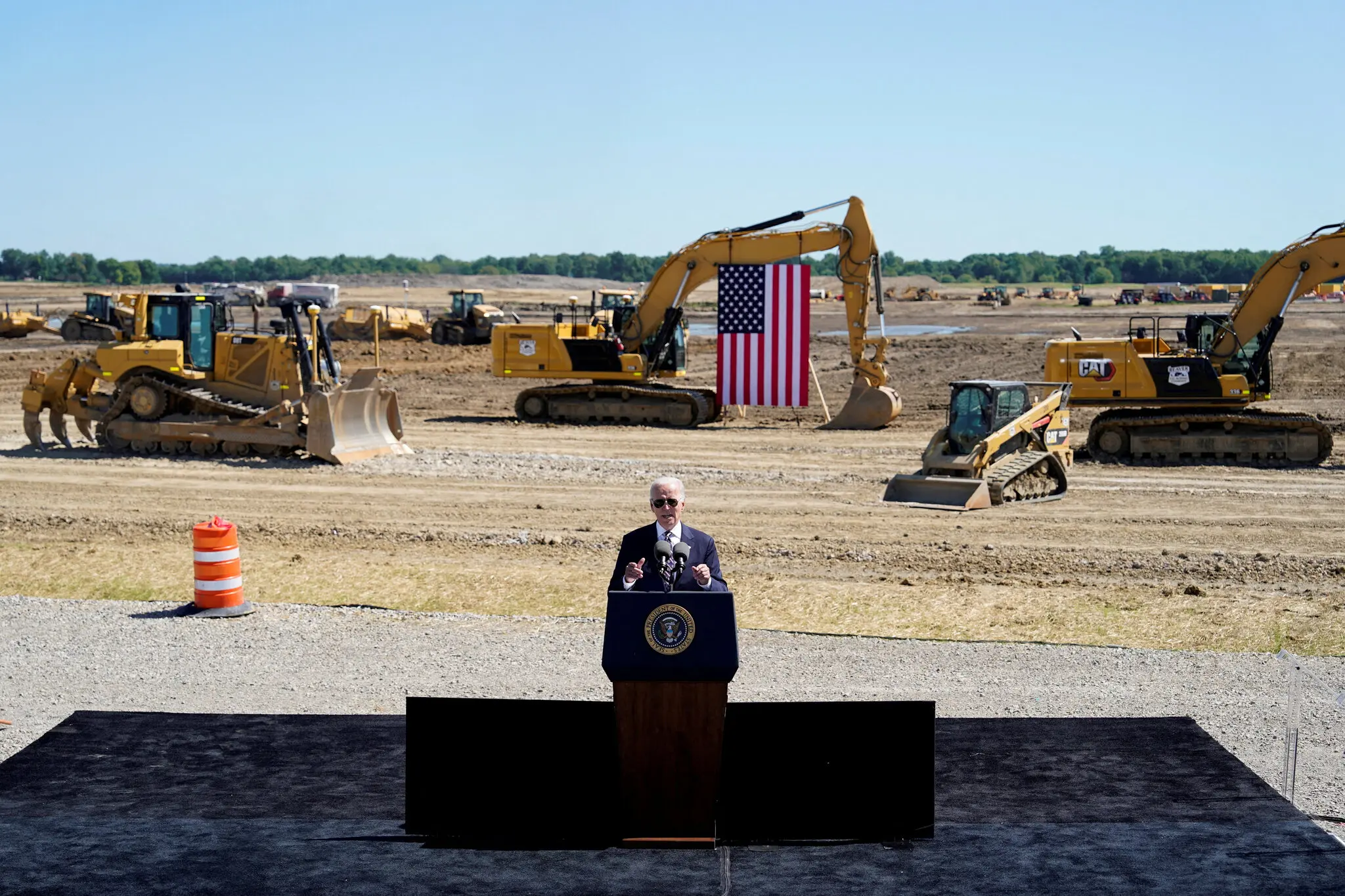
Frustration in rural America, which has long felt left behind in federal attention and dollars, has been a major driver of right-wing populism. To counter that, the Biden administration has bet literally billions on the idea that federal investments can turn those places around. The infrastructure act, the CHIPS and Science Act and the Inflation Reduction Act all contained special incentives aimed at improving the economic prospects of rural towns and small cities across the country.

It’s too early to tell whether it worked. Much of that money hasn’t even been spent. But a new report by the Brookings Institution gives us a clue. It tracked $525 billion in private investment in advanced technologies like clean energy and semiconductors that have been announced since 2021. The report found that a significant portion has gone into economically depressed places that hadn’t seen those types of investments before.

“The previous three years of data indicate that after decades of economic divergence, strategic sector investment patterns are including more places that have historically been left out of economic growth,” the report said.

It cited Haywood County, Tenn., where Ford and SK On, a South Korean battery company, have partnered to build an electric vehicle manufacturing plant, and Matagorda County, Texas, where HIF Global is investing over $6 billion to build what the company describes as the “first large commercial scale e-fuels facility in the world.” Of the $26.6 billion of private clean-tech investments that have been made in the U.S. since 2021, $6.6 billion ended up in employment-distressed communities, the report said.

The Wall Street Journal

Mayor: Oracle is making ‘maybe the single-largest corporate investment in Nashville’

Mayor Freddie O’Connell is working with fresh intel when he says that software giant Oracle Corp. is committed to its Nashville investment.

O’Connell made that remark at the Feb. 8 Nashville Business Breakfast, hosted by the Business Journal and Lipscomb University.

Two days prior, the mayor met with Merissa Khachigian, Oracle’s top Tennessee lobbyist.

The session was “introductory in nature,” said O’Connell spokesman Alex Apple. He said the others at the meeting were Greg Hinote, who represents Oracle as co-owner of the Nashville lobbying firm Jigsaw, and Bob Mendes, Metro’s chief development officer.

At the Business Breakfast event, O’Connell was asked how the enduring forces of remote work and hybrid jobs might impact the scope of Oracle’s plans — which were first revealed almost three years ago.

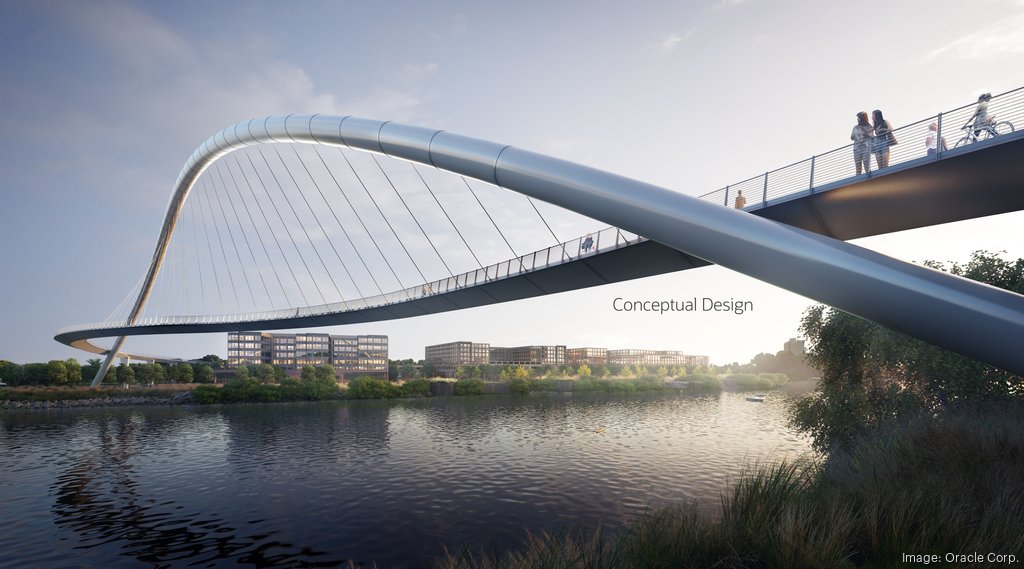
“They highlighted what you just said,” O’Connell said in response to the question. “I don’t think it’s going to change dramatically their plans. They’ve clearly got a very large investment in Nashville — maybe the single largest corporate investment in Nashville. And they’re committed to it. They’re committed to the infrastructure process.”

Nashville Business Journal

‘We’re in no man’s land’: Nashville sees lowest number of CRE closings in over a decade

Nashville real estate has been on a hot streak, but closings are beginning to cool.

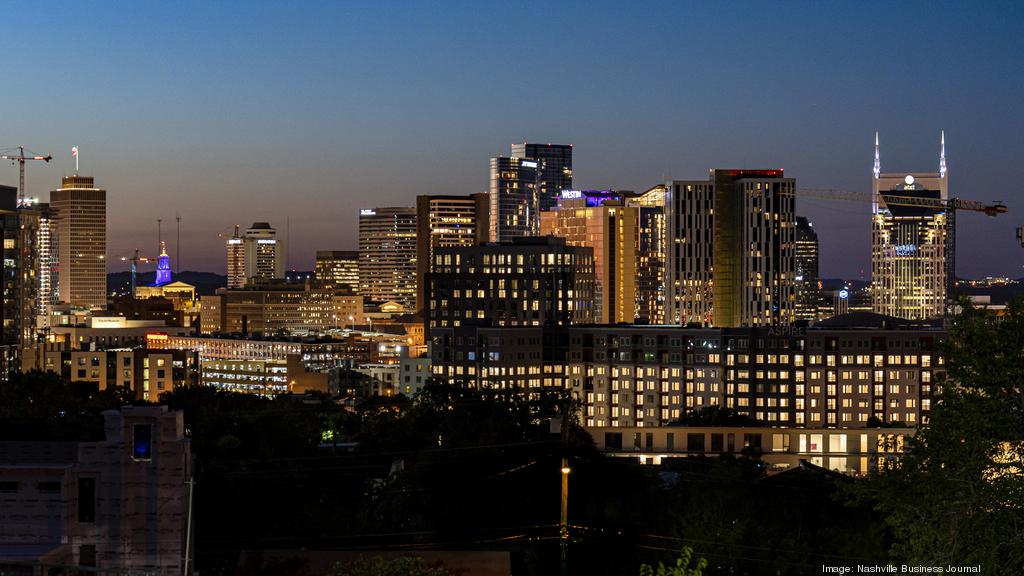
Nashville closed out 2023 with its lowest number of commercial real estate closings in over a decade. Last year, the city saw a total of 424 closings — its lowest number since 2011, according to Metro research.

“When you’ve had a really good long bull run like we’ve had where prices keep increasing, rents keep going up and, all of a sudden, you have a pretty rapid rise in rates — in order to make the same deal work today that you did two years ago, you can’t pay those same prices,” Stephen Prather, vice president at Charles Hawkins Co., told the Business Journal.

Over the past decade, the city has seen a mad dash from both local and out-of-town investors for Nashville property. Despite a few outlier years, there has been steady increase in both the number of closings and dollar volume of transactions since 2012.

2022 was a record year for Music City with nearly $6.5 billion in transactions. The transaction volume fell more than half in 2023, coming in at $2.8 billion at the end of the year, according to Metro research.

“That was such a unique period of so much money coming to Nashville, so many people moving to Nashville — that may be hard to replicate again,” Prather said. Nashville Business Journal

‘Zombie Offices’ Spell Trouble for Some Banks

Graceful Art Deco buildings towering above Chicago’s key business district report occupancy rates as low as 17 percent.

A set of gleaming office towers in Denver that were full of tenants and worth $176 million in 2013 now sit largely empty and were last appraised at just $82 million, according to data provided by Trepp, a research firm that tracks real estate loans. Even famous Los Angeles buildings are fetching roughly half their prepandemic prices.

From San Francisco to Washington, D.C., the story is the same. Office buildings remain stuck in a slow-burning crisis. Employees sent to work from home at the start of the pandemic have not fully returned, a situation that, combined with high interest rates, is wiping out value in a major class of commercial real estate. Prices on even higher-quality office properties have tumbled 35 percent from their early-2022 peak, based on data from Green Street, a real estate analytics firm.

Those forces have put the banks that hold a big chunk of America’s commercial real estate debt in the hot seat — and analysts and even regulators have said the reckoning has yet to fully take hold. The question is not whether big losses are coming. It is whether they will prove to be a slow bleed or a panic-inducing wave.

The New York Times