Graceful Art Deco buildings towering above Chicago’s key business district report occupancy rates as low as 17 percent.
A set of gleaming office towers in Denver that were full of tenants and worth $176 million in 2013 now sit largely empty and were last appraised at just $82 million, according to data provided by Trepp, a research firm that tracks real estate loans. Even famous Los Angeles buildings are fetching roughly half their prepandemic prices.
From San Francisco to Washington, D.C., the story is the same. Office buildings remain stuck in a slow-burning crisis. Employees sent to work from home at the start of the pandemic have not fully returned, a situation that, combined with high interest rates, is wiping out value in a major class of commercial real estate. Prices on even higher-quality office properties have tumbled 35 percent from their early-2022 peak, based on data from Green Street, a real estate analytics firm.
Those forces have put the banks that hold a big chunk of America’s commercial real estate debt in the hot seat — and analysts and even regulators have said the reckoning has yet to fully take hold. The question is not whether big losses are coming. It is whether they will prove to be a slow bleed or a panic-inducing wave.
In 2023, the Evan Williams Bourbon Experience celebrated its 10th anniversary, marking a significant milestone for Louisville’s bourbon industry. What started as the city’s first visitor-facing bourbon attraction has evolved into a catalyst for a spirited renaissance. Over the past decade, Louisville has witnessed a surge in bourbon-themed establishments, festivals and distilleries, transforming its downtown into a hub of whiskey culture.
The bourbon resurgence
Since the opening of the Evan Williams Bourbon Experience in 2013, Louisville has experienced a bourbon renaissance that harkens back to the late 1800s and early 1900s when the city’s downtown was home to more than 80 bourbon-related businesses. Most were shut down when Prohibition – the infamous period that elicited speakeasies, gangsters and bootlegging from 1920 to 1933 when the 18th Amendment prohibited the production, sale, transportation and import of alcoholic beverages in the United States – was enacted.
But with the surge in bourbon and bourbon tourism’s popularity in the early 2000s, distilleries embraced visitor experiences and brand homes in Kentucky – where 95% of all bourbon is made. Downtown Louisville distilleries that have opened since 2013 include Angel’s Envy, Old Forester, Rabbit Hole, Kentucky Peerless and Michter’s. Louisville Business First
The real estate data company CoStar Group will move its headquarters from downtown D.C. to Arlington, its executives said Tuesday, marking another corporate relocation that could deal a blow to the District’s struggling central business area while boosting its Northern Virginia suburbs.
Virginia Gov. Glenn Youngkin (R) approved nearly $5 million in public funds for the company to subsidize the relocation. CoStar, which employs about 650 people in its D.C. office, has purchased a Rosslyn office building that it plans to move into later this year.
“Virginia’s a great choice for a new corporate headquarters location,” Youngkin said in a news release announcing the move. “As states compete for business and jobs, the Commonwealth’s diverse, world-class talent, exceptional quality of life and stable business climate continues to stand out.”
Siemens Energy is bringing more than 500 jobs to North Carolina.
The manufacturing jobs, to be located in both Mecklenburg and Wake counties, were disclosed during today’s meeting of the Economic Investment Committee, a group under the N.C. Department of Commerce responsible for approving incentive packages.
The majority of the 559 announced positions will be in Mecklenburg, and 85 jobs will be in Wake County, according to Gov. Roy Cooper’s office. The jobs are high-paying, with minimum wages of more than $87,000, according to what the company told the state.
Siemens Energy plans to invest nearly $150 million across both counties, where it already has operations.
In Mecklenburg County, the company will establish its first manufacturing site in the U.S. to build Large Power Transformers (LPTs), a critical component of the nation’s power grid. Siemens Energy is repurposing 53,800 square feet of existing floor space in Charlotte and adding an 86,100-square-foot expansion there to make the transformers.
Siemens Energy’s Charlotte location spans more than 1 million square feet at 101 Siemens Ave., which is just off Westinghouse Boulevard. The company employs more than 1,250 workers there.
Alabama companies exported goods and services worth more than $27.4 billion in 2023 – the second straight year that exports bested the previous year’s total.
Overseas shipments of Alabama-made vehicles, aerospace parts, minerals and metals, as well as other products, rose more than 6% from the 2022 mark of $25.5 billion, according to the Alabama Department of Commerce.
“Exporting acts as a fundamental economic pillar that supports growth in Alabama, sparking both new investment and job creation here at home,” Gov. Kay Ivey said in an announcement. “The record-breaking success of our exporters extends the reach of the ‘Made in Alabama’ brand while reflecting the high level of demand for our homegrown products.”
RentCafe, a subsidiary of Santa Barbara, California-based real estate analytics firm Yardi Systems Inc., analyzed website traffic data for rental listings from the 150 largest U.S. cities to paint a picture of renter preferences to begin the year.
The economy-wide clean energy study for parts of seven Southeast states from the University of Tennessee Baker School of Public Policy and Public Affairs quantifies sources of greenhouse gas emissions and evaluates pathways to reach net-zero emissions across the Valley by 2050.
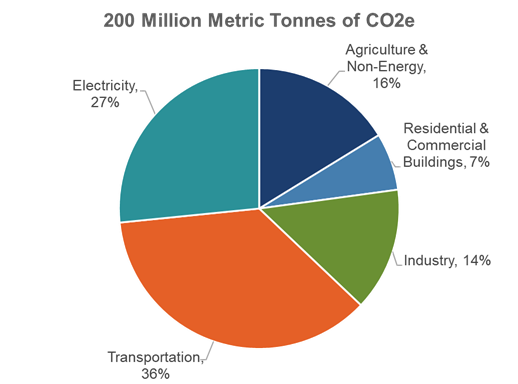
Findings include that the Tennessee Valley region’s 10 million residents generate about 200 million metric tonnes of carbon each year.
Transportation is the largest source of carbon emissions in the region at 36% of the total and electrifying light-duty vehicles is the single largest carbon reduction opportunity, the study found.
Editor’s Note:Click for downloadable video and audio of Dr. Charles Sims, Director of the Center for Energy, Transportation, and Environmental Policy, at the University of Tennessee Baker School and TVA President and CEO Jeff Lyash.
JOHNSON CITY, Tenn. ― The University of Tennessee, Knoxville, Baker School of Public Policy and Public Affairs presented the results of a landmark Valley Pathways Study on Wednesday at the quarterly meeting of the Board of Directors for the Tennessee Valley Authority. The study is the first of its kind for the region – which includes parts of seven Southeast states. This study quantifies carbon emission sources by economic sectors and evaluates actionable strategies for the region to achieve net-zero carbon emissions by 2050. The Baker School will provide future updates as data is available.
“The data is clear, there is no one solution to achieve net-zero emissions, and we must address the root cause across all economic sectors – where we work together – in order to drive meaningful change,” said Dr. Charles Sims, who was also recently named as TVA’s Inaugural Distinguished Professor of Energy and Environmental Policy. “Reducing greenhouse gas emissions is not just a case of electrifying everything and pushing the electricity sector to phase out all fossil fuels. Electricity still needs to strive toward net zero, but shifting all the responsibility to TVA, will not achieve economy-wide net-zero and may make achieving those goals more costly than it needs to be.”
The study looked at carbon emissions and gathered data from 24 sources – including agricultural, transportation, industrial, residential – and used scenario-based analysis to compare various possible solutions to help determine the timing, scale and effect of achieving carbon reduction goals.
Key Insights
The Tennessee Valley region emits 200 million tonnes of carbon each year – about 3% of U.S. carbon emissions. As of 2019, the region’s carbon emissions have fallen by 78 million tonnes or 30% since 2005 – much of this reduction is attributable to a 50% reduction in emissions from TVA’s electricity generation and 39% reduction from agriculture due to the adoption of no-till farming. In FY23, 55% of TVA’s overall power supply was carbon-free. Unlike the rest of the nation which still uses fossil fuels for 60% of its power. Reductions in the electricity sector alone are unable to bring the entire region to net-zero by 2050. If TVA achieved net-zero by 2050, the region would still produce almost 150 million tonnes of carbon. Therefore, support from other economic sectors is required.
Sims notes that 73% of the emissions are non-electricity related and the private sector is going to have to drive change as the region’s population is projected to grow by 22% by 2050. “We are lucky to have a clean energy leader like TVA here in the Valley. While TVA has full responsibility for electricity generation, if we work together, we are likely to find low-hanging fruit that TVA could not achieve on their own,” said Sims.
Tennessee Valley 2019 Greenhouse Gas Emissions (estimated). Commissioned by TVA and UTK Baker Center. Prepared by Guidehouse and VEIC. Nov. 2023.
Transportation is the largest source of carbon emissions – at 36% – and will continue to rise unless action is taken. Vehicle miles traveled is projected to increase by 59% by 2050.
Industrial, and Residential/Commercial buildings generate 21% of the region’s emissions.
Agriculture & Non-energy emissions are 16% of the region’s total. This includes sources such as methane emissions from cattle, waste disposal, and storage and wastewater treatment.
Carbon Reduction Solutions
The study modeled several actions that are building blocks for creating the net-zero economy of the future which include:
More Electric Vehicles – Electrifying light-duty vehicles is the single largest carbon reduction opportunity. Between September 2022 and September 2023, the Southeast increased the number of electric charging stations by 69% and now has 15,036 stations across the region, according to the Southern Alliance for Clean Energy.
Make Homes/Businesses More Efficient – High-efficiency heat pumps, LED lighting, and weatherizing buildings, can decrease emissions, reduce utility bills, and relieve stress on the energy grid. TVA is investing $1.5 billion in residential/commercial energy efficiency rebates to help consumers kickstart their savings.
Develop Low-Carbon Fuels – Research and invest in low-carbon fuels to unlock emission reductions for aviation, trucks, and industry.
Education & Innovation – Support every facet of a net-zero economy, from workforce training to research and development for carbon capture.
“Carbon reduction touches every household, business and community, and success means we must work together to develop actionable strategies to accelerate the transition to a clean-energy economy,” said TVA President and CEO Jeff Lyash. “As a clean energy leader, TVA is on the forefront to drive carbon reduction across all sectors of the economy and provide the clean power needed to give our region a competitive advantage. We will continue to work with all our partners across the region to achieve our clean energy goals, together.”
Business, Community Leaders and Partners Responded Favorably to the Study:
“TVA’s significant investments in Kentucky spans electricity generation to natural resource management, economic development to connecting communities. The Valley Pathways Study builds on the foundation of reliable, resilient, low-cost power to meet the increasing energy demands of the future. The Study ultimately will help inform activities outlined in Governor Beshear’s energy strategy where energy, economic development and the environment intersect to bring resilience community based, energy economic development opportunities that are affordable and sustainable.” Evan Moser, Data Scientist, Office of Energy Policy Kentucky Energy and Environment Cabinet
“Valley Pathways study is an unprecedented effort to develop decarbonization pathways across an entire region, and it should be a model for other regions in the United States looking to reduce carbon emissions across all sectors. By taking a holistic view of carbon reduction opportunities, this study provides a pathway for Valley-wide collaboration to achieve net zero carbon emissions by 2050.” Dr. William Bryan, Director of Research, Southeast Energy Efficiency Alliance
“The Valley Pathways Study should give folks that live in the Valley hope that with innovation there comes change – positive change – and that innovation can be found in the Valley. You don’t have to look at the coasts. We can look right here in the southeast, we can look right here in Appalachia, we can look right here in the Tennessee Valley for some of the solutions that not only will help bring us a cleaner environment, but also new economic opportunities for our state and our country.” Cortney Piper, Executive Director, Tennessee Advanced Energy Business Council
“We must look at all the economic activities across the region because people are involved in different things that consume energy. Showing that carbon reduction is beneficial to them from the economic perspective, by adopting these strategies, they can help the environment and still improve their bottom line.” Dr. Ignatius Fomunung professor of civil engineering at the University of Tennessee at Chattanooga College of Engineering and Computer Science
“The Valley Pathways Study has been a big step forward in identifying both the challenges and potential solutions for the Tennessee Valley as we shift towards carbon-free energy. Being among this diverse group of stakeholders as we freely communicated our ideas, questions, and concerns, I have a much better view of the ‘big picture’, and how my role can positively impact it.” Don Henderson, Energy Manager, USAG Redstone
“Agriculture in the Valley is positioned to lead climate smart solutions through continued research and implementation of science based, economically sound practices. Farmers in the Tennessee Valley have a deep and abiding interest in the protection of the environment and are leaders in conservation practices which benefit the soil, water, and air. Modern agriculture is environmentally sustainable, and farmers strive to constantly improve the environmental resources in their care while playing a significant role in climate solutions.” Kevin Hensley, Director of Public Policy, Tennessee Farm Bureau
“This study will help address crucial gaps in access and affordability in communities where improvements are needed most. Low- and middle-income communities need help overcoming barriers to things like home energy efficiency upgrades, EVs and charging infrastructure, and the education and workforce development to support implementation of these technologies in the coming years. I look forward to continuing to work with the UT Baker School and TVA as we begin to reach out to local communities and congregations to take the results of this study and use them to find and implement efficient and environmental-justice-minded solutions for those who need them most.” Professor Daniel Joranko, Coordinator, Tennessee Interfaith Power and Light
“It can’t be overstated how important this study is, even if it’s just the first step. By recognizing that this conversation about climate is a priority and seeing it as an opportunity for all sectors of the economy, TVA creates a space for this conversation to occur. There’s a huge economic opportunity that the Tennessee Valley region is already seeing because of decarbonization efforts and commitments from TVA. This study is broadening that conversation, widening the tent, and highlighting how these efforts and opportunities impact everything from new manufacturing to community resilience.” Erik Schmidt, Director of Sustainability, City of Chattanooga
“The Nature Conservancy applauds TVA and the University of Tennessee for acknowledging the important role clean energy and nature will play in addressing climate change. Today forests in the Valley sequester about 17 Million Metric Tonnes of C02e. While this is not enough to offset emissions in the Valley and must be combined with a rapid transition to clean energy, the study shows that forests have an important role to play as a natural climate solution. This is a great case for doing more to protect forests and other natural areas for carbon sequestration, as well as the additional benefits of wildlife habitat, flood protection, recreation, and the timber economy. The Nature Conservancy looks forward to continuing to work to pair natural climate solutions with carbon reductions across energy and other sectors to achieve a net zero future for the Tennessee Valley.” Lindsay Hanna, Director of Government Relations & Climate Policy, The Nature Conservancy in Tennessee
About the Howard H. Baker Jr. School of Public Policy and Public Affairs
The Baker School is the first and only school of its kind at any public university in Tennessee, and its mission is to graduate skilled public problem solvers prepared to take leadership roles as public servants, public administrators, policy analysts, policy entrepreneurs, or candidates for public office. Currently offering a master’s in public policy and administration degree and multiple undergraduate student programs providing mentoring support, networking opportunities, and firsthand experience in the world of public service, the Baker School teaches students to embrace the competition of ideas as a way of reaching more durable solutions, offering a way forward for those with the resolve to make things better.
About TVA
The Tennessee Valley Authority is the nation’s largest public power supplier, delivering energy to 10 million people across seven southeastern states. TVA was established 90 years ago to serve this region and the nation by developing innovative solutions to solve complex challenges. TVA’s unique mission focuses on energy, environmental stewardship, and economic development. With one of the largest, most diverse, and cleanest energy systems – including nuclear, hydro, solar, gas, and advanced technologies – TVA is a leader in our nation’s drive toward a clean energy future.
TVA is a corporate agency of the United States, receiving no taxpayer funding, deriving virtually all of its revenues from sales of electricity. In addition to operating and investing its revenues in its electric system, TVA provides flood control, navigation, and land management for the Tennessee River system, and assists local power companies and state and local governments with economic development and job creation.
The Alabama Port Authority has selected a location for its third intermodal container transfer facility in Alabama, marking the next step in the Port Authority’s inland rail expansion.
It chose Decatur, and the new facility is in partnership with CSX Transportation. It will complete rail connectivity from the ICTF at the Port of Mobile to customers in the central and northern parts of the state. Redevelopment of a portion of an existing CSX facility will expedite its ability to serve customers in North Alabama.
“The facility’s strategic location improves multi-modal flexibility throughout the state and creates sustainable, dynamic, rail-to-truck transportation solutions for our customers,” said Maryclare Kenney, CSX vice president of intermodal and auto.
JPMorgan Chase & Co. plans to follow the growth happening north of Dallas in Collin County as part of its major branch expansion over the next three years.
The New York-based financial giant announced Feb. 6 plans to open 500 new branches nationwide by 2027. While most of that growth will occur in places like Boston, Charlotte, Washington, D.C. and Philadelphia, the Dallas-Fort Worth Metroplex will not be left out.
Liz Molina, head of Chase branches in North Texas and Austin, said the bank will build about 15 branches in Texas as part of the expansion, including five in DFW.
Personally, Mayor Freddie O’Connell may have had his fill of men’s professional sports teams in Nashville.
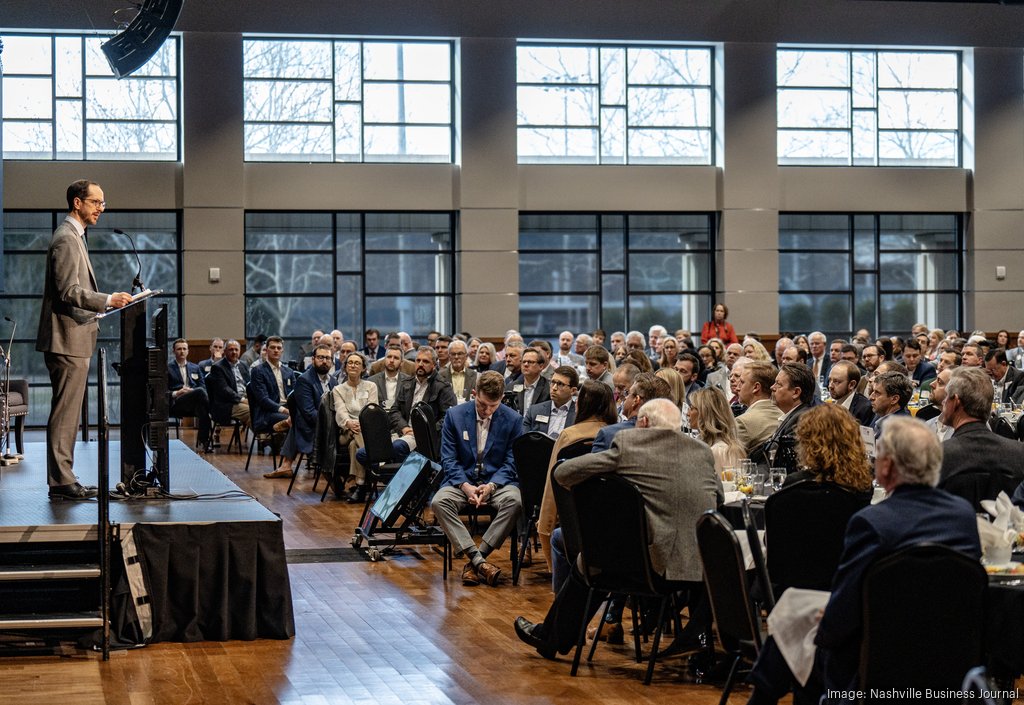
The mayor, speaking to more than 400 businesspeople at the Feb. 8 Nashville Business Breakfast event, called himself “as interested, if not more interested, in ensuring that women’s athletics actually start to take on an important role in the city.”
O’Connell was asked at the event if the city was going to land a Major League Baseball franchise.
“I don’t know, have you met anybody who’s willing to publicly fund a stadium?” O’Connell replied, prompting some laughter in the audience.
For years, a private group has been pursuing such a team and possible stadium site, though it has yet to publicly name a billionaire committed to finance that vision. League Commissioner Rob Manfred said in 2023 that “Nashville’s on everybody’s list” for potential expansion. Jerry Reinsdorf, owner of the Chicago White Sox, sought and received a meeting with O’Connell in December (renderings of a potential new ballpark development in Chicago became public this week).