VIDEO: Is a major economic development on tap for Madison County?

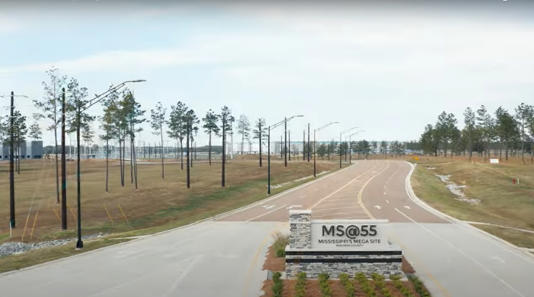
ADISON CO., Miss. (WLBT) – Comments made Thursday afternoon at the Mississippi State Capitol could be signs a major economic development project is in the works for Madison County.


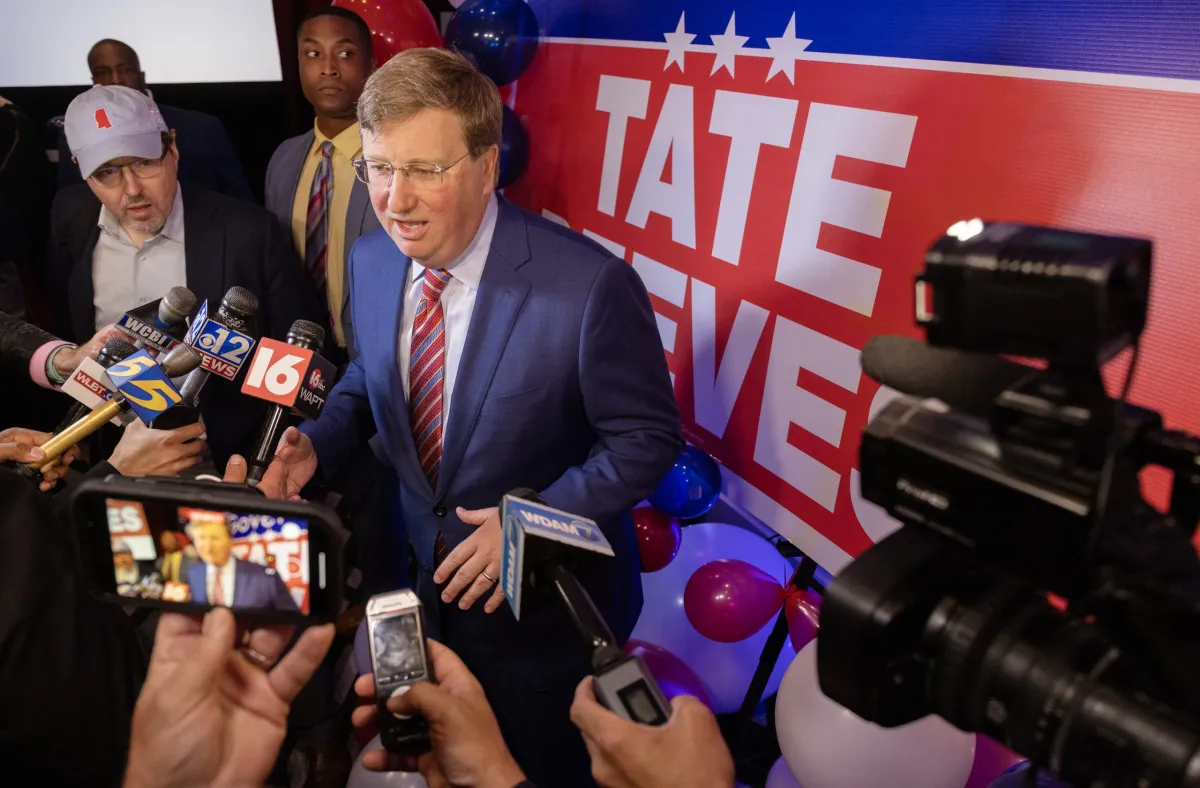
On Thursday, Gov. Tate Reeves and the Mississippi Legislative Black Caucus held dueling press conferences to discuss the approval of hundreds of millions in incentives for electric battery manufacturers coming to Marshall County.

Members of the Black Caucus said they weren’t opposed to economic development, but said they’d like to see more economic development for the areas they represent.


“They’ll probably be an economic development project for Madison County next week,” said Rep. Robert Johnson, the House minority leader. “And they would tell Bryant Clark and Holmes County, ‘Oh, that will help your area because you drive over to Madison County and take advantage of those jobs.”

Clark represents Attala, Holmes, and Yazoo Counties. He also is a member of the Black Caucus.


“If they could drive over to Madison County, let them drive over to Holmes County,” Johnson continued. “He has all the land, all the resources, all the workforce development training you need. Let somebody drive to our areas and take advantage.”


It’s unclear what type of project Johnson was referring to.


Joey Deason, executive director of the Madison County Economic Development Authority, would not comment.


During his press conference, Gov. Tate Reeves didn’t speak specifically on Madison County.


However, he did say more economic development news could be coming down the pipeline.


“I don’t think this is going to be the last announcement made of a major economic development project in the great state of Mississippi,” he said. “We’ve had some tremendous prospects and projects west of I-55 over the last four years, and it is my expectation we’re going to continue to see wins east of I-55, west of I-55, north of I-20, and south of I-20 because we’ve got good people in every region of our state.”


“I can’t guarantee you where the next project may locate, but I can tell you this: I’m real confident that wherever the next project comes, most people are going to be happy about it.”


Jackson WLBT

Wells Fargo CFO on commercial real estate’s woes: ‘It’s a long movie’

Wells Fargo is starting to see losses roll in from commercial real estate loans going bad, especially in the troubled office sector, a top executive said. But so far, the bank isn’t seeing the stress spread to other types of commercial real estate in its loan portfolio.

“It’s a long movie. We’re past the opening credits, but we’re still in the beginning of the movie,” Mike Santomassimo, Wells Fargo’s (NYSE: WFC) chief financial officer, said on the bank’s earnings call last week. “It’s going to take some time for this to play out.”

Commercial real estate was a topic that analysts kept circling back to on the bank’s earnings call. Wells Fargo’s commercial loan charge-offs were spread among a number of properties across the country rather than being concentrated in a few properties or markets.

Atlanta Business Chronicle

Cummins details scope, impact of $1.9B Marshall County truck battery project

A tri-venture of big brand names in American commercial trucking plan to build a $1.9 billion battery facility, bringing 2,000 jobs to Marshall County.

State of Mississippi legislators approved a $365 million incentive package to finalize the deal this afternoon. The operation would produce batteries for medium and heavy duty commercial electric trucks and industrial applications. It is set to be located in the 3,600-acre Chickasaw Trails Industrial Park near U.S. Hwy. 72, Miss. Hwy. 302, and I-269 in Byhalia, Mississippi. Jobs are expected to have an average wage of $66,000.

The three publicly traded companies of the tri-venture are Cummins, Daimler Truck, and Paccar. Work is set to begin this spring or summer, with a targeted launch date of 2027.

Memphis Business Journal

Gov. Abbott heading to India as his national profile rises

As Gov. Greg Abbott’s national profile grows, he’s also building up his foreign policy credentials by traveling the globe and weighing in on international events — further hinting at a larger future role in politics.


On Saturday, Abbott begins a nine-day trip to India to meet with top government and economic leaders there.

“There is great potential for us to expand critical industry and trade partnerships with India,” Abbott said Friday. “I look forward to leading this economic development mission as we share the story and spirit of Texas’ longtime economic success and ingenuity with the people of India.”


Houston Chronicle

A YouTuber drove Tesla’s Cybertruck, Rivian’s R1T, and Ford’s F-150 Lightning. Here’s his verdict.

  • A YouTuber compared Tesla’s new Cybertruck with a Rivian R1T and a Ford F-150 Lightning.
  • Out of Spec Reviews’ Kyle Conner pointed out key differences between the trucks.
  • While he said it was a case of personal preference, his winner was the Rivian.

When Tesla started shipping its much-anticipated Cybertruck in late November 2023, Rivian and Ford got a new electric-truck road rival. Now, one of the first cross-comparisons of the three vehicles is in.


Out of Spec Reviews‘ Kyle Conner looked at everything from the trucks’ range and charging speeds to their front trunks and bed sizes — as well as the comfort of the vehicles. The winner for the YouTuber: The Rivian R1T.

“If I had to choose one vehicle to live with forever, this is it,” Conner said, explaining that it was the right size, had the right materials, and had the right driving performance for him.


Conner did say he could still find issues to “nitpick” with the Rivian and said it might not be the right truck for everyone, adding that he thought the vehicles each catered to a different type of owner.


“It’s a very Patagonia truck,” Conner said of the Rivian, pointing out that it was great for off-roading and that he enjoyed using the truck for daily driving.


Meanwhile, he said the Cybertruck was more for “tech bros” or urban driving, while the F-150 Lightning was the “traditional working man” truck.


Business Insider

SC Ports Gives Midlands Big Economic Boost

CHARLESTON, SC — JAN. 12, 2023 — By efficiently moving cargo for port-dependent businesses, South Carolina Ports makes a $22.3 billion economic impact in the Midlands region each year.

This is a quarter of SC Ports’ $87 billion annual economic impact across the state, according to a recent study by research economist and University of South Carolina professor Dr. Joseph Von Nessen. New data show a 43% increase in economic impact in the Midlands since the previous study was performed in 2019.

“These numbers show that SC Ports’ value to South Carolina extends well beyond the Port of Charleston,” SC Ports President and CEO Barbara Melvin said. “In the Midlands, we’re supporting advanced manufacturers, healthcare companies, retailers and paper producers, moving goods for large companies and small businesses alike. These relationships with our customers provide a proven economic benefit to Midlands residents.”

By keeping freight moving for SC companies, SC Ports directly and indirectly supports more than 67,000 jobs in the Midlands, with labor income totaling $4.5 billion.

“SC Ports is a tremendous asset to South Carolina,” SC Ports Board Chairman Bill Stern said. “A well-run port system brings world-class businesses to the state, which in turn means good-paying jobs and opportunities right here in the Midlands. SC Ports is proud to be a true economic engine for our state’s residents.”

Looking at South Carolina overall, port operations support 260,000 jobs, meaning 1 in 9 jobs in South Carolina are tied directly or indirectly to SC Ports.

“Port operations attract port-dependent businesses to locate or expand throughout the state, generating billions in economic impact and supporting thousands of jobs for South Carolinians,” Von Nessen said. “Our state’s economic success is directly linked to SC Ports’ continued growth.”

Read the full report here.

About South Carolina Ports

South Carolina Ports owns and operates marine terminals at the Port of Charleston and two rail-served inland ports in Greer and Dillon. As the 8th largest U.S. container port, SC Ports connects port-dependent businesses throughout the Southeast and beyond to global markets. SC Ports proactively invests in infrastructure ahead of demand to provide reliable service, efficient operations, cargo capacity, an expansive rail network and the deepest harbor on the East Coast at 52 feet. SC Ports is a vital economic engine for South Carolina, with port operations supporting 1 in 9 jobs statewide. Learn more: scspa.com.

‘They’re being totally ignored’: Lawmakers say Gov. Tate Reeves isn’t focusing economic development in majority-Black regions

Days after Republican Gov. Tate Reeves pledged to be a governor for all Mississippians, several Democratic lawmakers said Reeves uses his power to invest in certain parts of the state while ignoring others.


The governor demonstrated his favoritism just this week, the legislators said in a Wednesday interview with Mississippi Today, when Reeves called a special session to ask lawmakers to spend $350 million in state funds to finalize an economic development deal in north Mississippi’s Marshall County.


The legislators say none of the state’s recent economic projects have gone toward communities west of Interstate 55, an area where the Mississippi Delta and population hubs of Black citizens are located, or to the state’s capital city.


“Not taking anything away from Marshall County, but I do believe the impact of having 1,500 or 2,000 jobs west of I-55 would change the whole status of this state,” Democratic Rep. John Hines of Greenville said.


The Delta remains one of the most impoverished places in the nation. The region’s hospitals are at risk of closing, and its citizens are continuing to leave for other areas of the state and other states, according to U.S. Census data.


The Democratic officials argue that economic investment like the Marshall County project would give a major boost to west Mississippi, an area struggling to survive.


Rep. Robert Johnson III, the Democratic leader of the House, believes the Delta and southwest Mississippi, despite disinvestment, has an educated workforce that can staff major industries and an infrastructure system to transfer any goods produced — if only state leaders would give the area a chance.


“You’ve got I-55 to the east, you’ve got the largest river in the country to the west and you’ve got railways to go back and forth,” Johnson said. “It makes more sense to develop jobs in that area where you’ve got an infrastructure in place.”


The multibillion-dollar project on the table this week is, instead, scheduled to be constructed at the Chickasaw Trails Industrial Park near the Tennessee state line, where half of the state’s proposed investment is planned to go toward infrastructure development.


The Mississippi Development Authority, the economic agency directly under Reeves’ control, recently invested around $1.1 million in the Chickasaw Trails center, as well as over $15 million in 12 other industrial parks. None of those sites are located in the Delta, Hinds County or in west Mississippi.


“At the end of the day, you look at the population west of I-55, and that’s almost one-fourth of the state’s population,” Democratic Rep. Bryant Clark of Pickens said. “And they’re being totally ignored.”


Corey Custer, deputy chief of staff to Reeves, said in a Wednesday statement that the governor supports investing in all areas of the state, including the Delta, Hinds County and communities west of I-55.


“Private companies — not state government — determine which sites best meet their needs,” Custer said. “This project will help strengthen our state’s economy, which is a benefit to all Mississippians. Gov. Reeves will continue to use every tool at his disposal to bolster every region of our state.”


This is the second type of economic package that Reeves has called on lawmakers into a special legislative session to finalize. In November 2022, he signed legislation into law that gave money and tax incentives to benefit a Steel Dynamics expansion in Columbus, also located in northeast Mississippi.


The governor, at a Tuesday press conference, said the public can expect more state economic development projects to be announced in the future, though he did not give a specific timeline or disclose which areas of the state would be impacted.


Democratic Reps. Fabian Nelson of Jackson and Daryl Porter of Summit said on Wednesday if the governor pledges to unify the state along partisan and racial lines, then he should follow through and implement an economic plan that includes all areas of the state.


“It’s been said that Mississippi is open for business, but I think we need to define what part of Mississippi is open for business,” Nelson said.


Mississippi Today

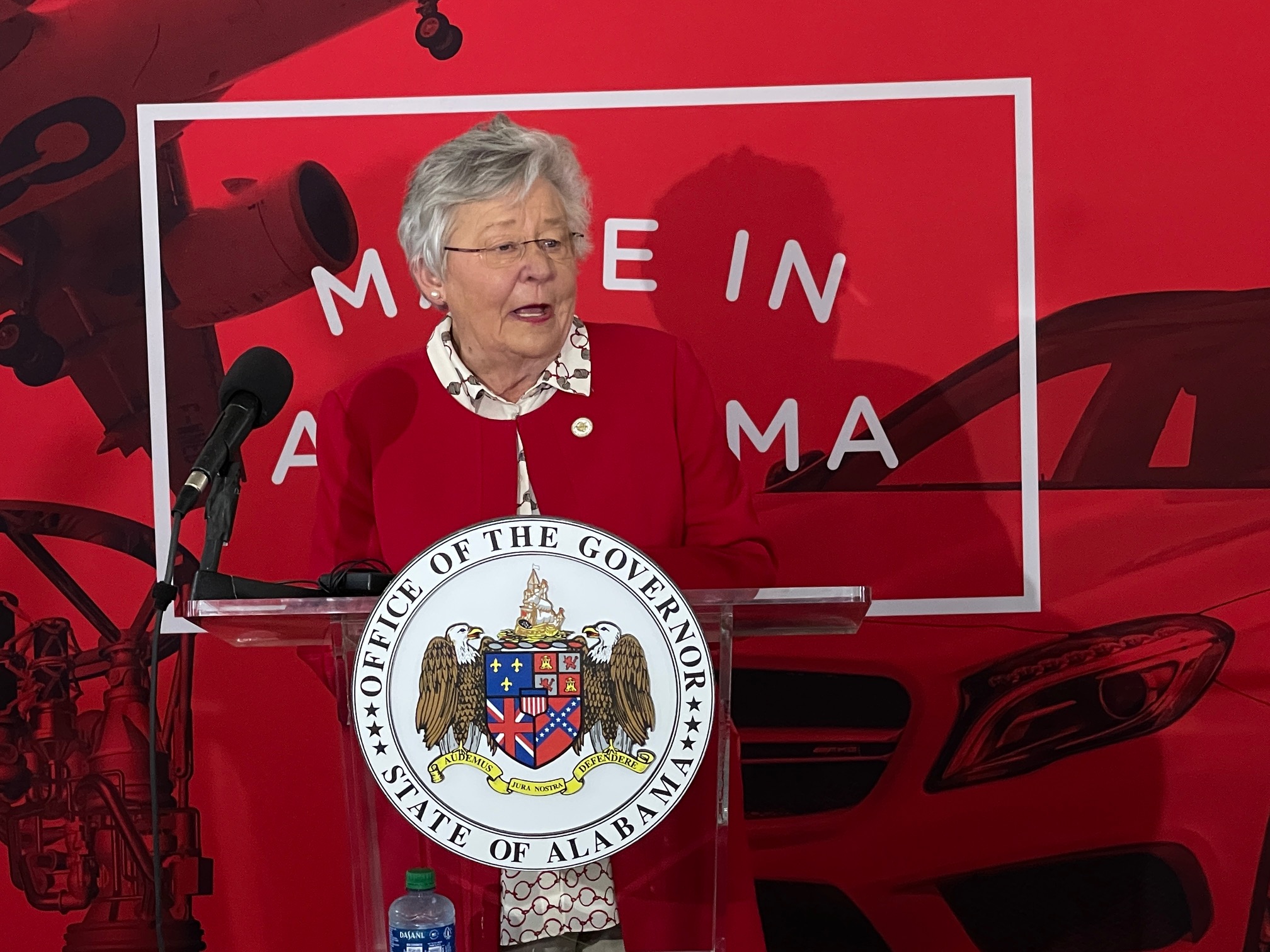
Gov. Ivey: Unions want to target one of Alabama’s crown jewel industries, but I’m standing up for Alabamians and protecting our jobs

Sept. 30, 1993 marked a watershed moment in Alabama history. That is the day Mercedes-Benz went against the grain and chose our state to be the home of their first U.S. manufacturing facility. It was a decision that changed the future of our state like no one could have imagined.

Fast forward more than 30 years to January 2024, and Alabama is a top five automotive manufacturing state with five world-class Original Equipment Manufacturers (OEMs) – Mercedes-Benz, Honda, Hyundai, Toyota and Mazda.

These manufacturers are key drivers of our economy, but who drives their success? The answer is nearly 50,000 hardworking Alabamians in the automotive manufacturing sector.

The men and women who work in Alabama OEM facilities and about 150 supporting supplier employers are highly skilled and highly paid. Helping create these types of opportunities is a major reason I sought public office in the first place. Opportunity is why I focus on education, workforce development and economic development. Every person who wants a good job in Alabama should be given every advantage the state can provide to land that job, turn it into a career and support their family with it.

Let’s take a step back to look at Alabama’s success in automotive manufacturing.

Mercedes-Benz came to Tuscaloosa in the 1990s and brought a host of its suppliers. More followed: Honda began producing vehicles in Lincoln in 2001; Hyundai production in Montgomery began in 2005; Toyota started manufacturing engines in Huntsville in 2003, then in 2018, Toyota announced a joint venture partnership with Mazda to form Mazda Toyota Manufacturing in Limestone County.

Today, all of that investment equates to a 1.3 million annual vehicle production capacity; more than $9 billion in annual exports; production of 15 different cars, SUVs and trucks, including three cutting-edge, all-electric vehicles; and it ranks Alabama the number 3 state for vehicle exports and the number five state for total auto production.

Alabama has become a national leader in automotive manufacturing, and all this was achieved without a unionized workforce. In other words, our success has been home grown — done the Alabama way.

Unfortunately, the Alabama model for economic success is under attack. A national labor union, the United Automotive Workers (UAW), is ramping up efforts to target non-union automakers throughout the United States, including ours here in Alabama.

Make no mistake about it: These are out-of-state special interest groups, and their special interests do not include Alabama or the men and women earning a career in Alabama’s automotive industry.

As governor, my special interest is the well-being of our great state and each of the 5 million Alabamians who live here, who have an opportunity to succeed here and can be proud to raise a family here. I will always stand strong for our hardworking men and women, as well as our world-class employers. When Alabamians are successful, our state is successful.

Alabama has a proud industrial past. Alabama is a leader in innovation and opportunity. It is a state where employers want to do business because they know they can succeed. And Alabama is a state that has proven it can be a worldwide leader in automotive manufacturing.

Alabama embraced a watershed moment in 1993, and we may soon face another watershed decision when the UAW asks nearly 50,000 Alabamians: Do you want continued opportunity and success the Alabama way? Or do want out-of-state special interests telling Alabama how to do business?

For me, the choice is clear. I stand by our proven track record of success. That is why I will always proudly support the great Alabama employers and the best employees in the world. That is why I will continue to make education, workforce development and economic development my top priorities. Alabamians work harder than anyone, we make the best automobiles in the world, and we must not let UAW tell us differently.

MadeInAlabama.com

Chemical producer plans $193M Suffolk expansion

Wilmington, Delaware-based Solenis, a producer of specialty chemicals for water-intensive industries, plans to invest $193 million to expand its Suffolk facility, creating 34 jobs, Gov. Glenn Youngkin announced Thursday.

Solenis plans to build an 80,000-square-foot production facility, packaging facility, a tank farm and add a new rail spur to accommodate the production of polyvinylamine polymer products, which are used in paper and cardboard manufacturing. The new facility will help the company grow its existing polymer product line and add capacity to the existing supplier, according to a news release.

Solenis operates nine plants at the Suffolk site, which manufactures products for the wastewater treatment, pulp and paper and other industries, a spokeswoman for the company told Virginia Business. The main facility is 45 acres large and about 100 employees work there. Solenis also has a plant in Courtland that manufactures products primarily for the pulp and paper industry. It has about 70 employees.

Virginia Business