University of Tennessee Baker School, TVA Release Landmark Clean Energy Study

  • The economy-wide clean energy study for parts of seven Southeast states from the University of Tennessee Baker School of Public Policy and Public Affairs quantifies sources of greenhouse gas emissions and evaluates pathways to reach net-zero emissions across the Valley by 2050.
  • Findings include that the Tennessee Valley region’s 10 million residents generate about 200 million metric tonnes of carbon each year.
  • Transportation is the largest source of carbon emissions in the region at 36% of the total and electrifying light-duty vehicles is the single largest carbon reduction opportunity, the study found.
  • Editor’s Note: Click for downloadable video and audio of Dr. Charles Sims, Director of the Center for Energy, Transportation, and Environmental Policy, at the University of Tennessee Baker School and TVA President and CEO Jeff Lyash. 

JOHNSON CITY, Tenn. ― The University of Tennessee, Knoxville, Baker School of Public Policy and Public Affairs presented the results of a landmark Valley Pathways Study on Wednesday at the quarterly meeting of the Board of Directors for the Tennessee Valley Authority. The study is the first of its kind for the region – which includes parts of seven Southeast states.  This study quantifies carbon emission sources by economic sectors and evaluates actionable strategies for the region to achieve net-zero carbon emissions by 2050. The Baker School will provide future updates as data is available.

“The data is clear, there is no one solution to achieve net-zero emissions, and we must address the root cause across all economic sectors – where we work together – in order to drive meaningful change,” said Dr. Charles Sims, who was also recently named as TVA’s Inaugural Distinguished Professor of Energy and Environmental Policy.  “Reducing greenhouse gas emissions is not just a case of electrifying everything and pushing the electricity sector to phase out all fossil fuels. Electricity still needs to strive toward net zero, but shifting all the responsibility to TVA, will not achieve economy-wide net-zero and may make achieving those goals more costly than it needs to be.”

The study looked at carbon emissions and gathered data from 24 sources – including agricultural, transportation, industrial, residential – and used scenario-based analysis to compare various possible solutions to help determine the timing, scale and effect of achieving carbon reduction goals. 

Key Insights

The Tennessee Valley region emits 200 million tonnes of carbon each year – about 3% of U.S. carbon emissions. As of 2019, the region’s carbon emissions have fallen by 78 million tonnes or 30% since 2005 – much of this reduction is attributable to a 50% reduction in emissions from TVA’s electricity generation and 39% reduction from agriculture due to the adoption of no-till farming. In FY23, 55% of TVA’s overall power supply was carbon-free. Unlike the rest of the nation which still uses fossil fuels for 60% of its power. Reductions in the electricity sector alone are unable to bring the entire region to net-zero by 2050. If TVA achieved net-zero by 2050, the region would still produce almost 150 million tonnes of carbon. Therefore, support from other economic sectors is required.

Sims notes that 73% of the emissions are non-electricity related and the private sector is going to have to drive change as the region’s population is projected to grow by 22% by 2050. “We are lucky to have a clean energy leader like TVA here in the Valley. While TVA has full responsibility for electricity generation, if we work together, we are likely to find low-hanging fruit that TVA could not achieve on their own,” said Sims.

Tennessee Valley 2019 Greenhouse Gas Emissions (estimated). Commissioned by TVA and UTK Baker Center.
Prepared by Guidehouse and VEIC. Nov. 2023.

  • Transportation is the largest source of carbon emissions – at 36% – and will continue to rise unless action is taken. Vehicle miles traveled is projected to increase by 59% by 2050.
  • Industrial, and Residential/Commercial buildings generate 21% of the region’s emissions.
  • Agriculture & Non-energy emissions are 16% of the region’s total. This includes sources such as methane emissions from cattle, waste disposal, and storage and wastewater treatment.

Carbon Reduction Solutions

The study modeled several actions that are building blocks for creating the net-zero economy of the future which include:

  • More Electric Vehicles – Electrifying light-duty vehicles is the single largest carbon reduction opportunity. Between September 2022 and September 2023, the Southeast increased the number of electric charging stations by 69% and now has 15,036 stations across the region, according to the Southern Alliance for Clean Energy.
  • Make Homes/Businesses More Efficient – High-efficiency heat pumps, LED lighting, and weatherizing buildings, can decrease emissions, reduce utility bills, and relieve stress on the energy grid. TVA is investing $1.5 billion in residential/commercial energy efficiency rebates to help consumers kickstart their savings.
  • Develop Low-Carbon Fuels – Research and invest in low-carbon fuels to unlock emission reductions for aviation, trucks, and industry.
  • Education & Innovation – Support every facet of a net-zero economy, from workforce training to research and development for carbon capture.

“Carbon reduction touches every household, business and community, and success means we must work together to develop actionable strategies to accelerate the transition to a clean-energy economy,” said TVA President and CEO Jeff Lyash. “As a clean energy leader, TVA is on the forefront to drive carbon reduction across all sectors of the economy and provide the clean power needed to give our region a competitive advantage. We will continue to work with all our partners across the region to achieve our clean energy goals, together.”

Business, Community Leaders and Partners Responded Favorably to the Study:

“TVA’s significant investments in Kentucky spans electricity generation to natural resource management, economic development to connecting communities. The Valley Pathways Study builds on the foundation of reliable, resilient, low-cost power to meet the increasing energy demands of the future. The Study ultimately will help inform activities outlined in Governor Beshear’s energy strategy where energy, economic development and the environment intersect to bring resilience community based, energy economic development opportunities that are affordable and sustainable.”
Evan Moser, Data Scientist, Office of Energy Policy Kentucky Energy and Environment Cabinet

“Valley Pathways study is an unprecedented effort to develop decarbonization pathways across an entire region, and it should be a model for other regions in the United States looking to reduce carbon emissions across all sectors. By taking a holistic view of carbon reduction opportunities, this study provides a pathway for Valley-wide collaboration to achieve net zero carbon emissions by 2050.”
Dr. William Bryan, Director of Research, Southeast Energy Efficiency Alliance

“The Valley Pathways Study should give folks that live in the Valley hope that with innovation there comes change – positive change – and that innovation can be found in the Valley. You don’t have to look at the coasts. We can look right here in the southeast, we can look right here in Appalachia, we can look right here in the Tennessee Valley for some of the solutions that not only will help bring us a cleaner environment, but also new economic opportunities for our state and our country.” 
Cortney Piper, Executive Director, Tennessee Advanced Energy Business Council

“We must look at all the economic activities across the region because people are involved in different things that consume energy. Showing that carbon reduction is beneficial to them from the economic perspective, by adopting these strategies, they can help the environment and still improve their bottom line.”
Dr. Ignatius Fomunung professor of civil engineering at the University of Tennessee at Chattanooga College of Engineering and Computer Science

“The Valley Pathways Study has been a big step forward in identifying both the challenges and potential solutions for the Tennessee Valley as we shift towards carbon-free energy.  Being among this diverse group of stakeholders as we freely communicated our ideas, questions, and concerns, I have a much better view of the ‘big picture’, and how my role can positively impact it.”
Don Henderson, Energy Manager, USAG Redstone

“Agriculture in the Valley is positioned to lead climate smart solutions through continued research and implementation of science based, economically sound practices. Farmers in the Tennessee Valley have a deep and abiding interest in the protection of the environment and are leaders in conservation practices which benefit the soil, water, and air. Modern agriculture is environmentally sustainable, and farmers strive to constantly improve the environmental resources in their care while playing a significant role in climate solutions.”
Kevin Hensley, Director of Public Policy, Tennessee Farm Bureau

“This study will help address crucial gaps in access and affordability in communities where improvements are needed most. Low- and middle-income communities need help overcoming barriers to things like home energy efficiency upgrades, EVs and charging infrastructure, and the education and workforce development to support implementation of these technologies in the coming years. I look forward to continuing to work with the UT Baker School and TVA as we begin to reach out to local communities and congregations to take the results of this study and use them to find and implement efficient and environmental-justice-minded solutions for those who need them most.”
Professor Daniel Joranko, Coordinator, Tennessee Interfaith Power and Light

“It can’t be overstated how important this study is, even if it’s just the first step. By recognizing that this conversation about climate is a priority and seeing it as an opportunity for all sectors of the economy, TVA creates a space for this conversation to occur. There’s a huge economic opportunity that the Tennessee Valley region is already seeing because of decarbonization efforts and commitments from TVA. This study is broadening that conversation, widening the tent, and highlighting how these efforts and opportunities impact everything from new manufacturing to community resilience.”
Erik Schmidt, Director of Sustainability, City of Chattanooga

“The Nature Conservancy applauds TVA and the University of Tennessee for acknowledging the important role clean energy and nature will play in addressing climate change. Today forests in the Valley sequester about 17 Million Metric Tonnes of C02e.  While this is not enough to offset emissions in the Valley and must be combined with a rapid transition to clean energy, the study shows that forests have an important role to play as a natural climate solution. This is a great case for doing more to protect forests and other natural areas for carbon sequestration, as well as the additional benefits of wildlife habitat, flood protection, recreation, and the timber economy. The Nature Conservancy looks forward to continuing to work to pair natural climate solutions with carbon reductions across energy and other sectors to achieve a net zero future for the Tennessee Valley.”
Lindsay Hanna, Director of Government Relations & Climate Policy, The Nature Conservancy in Tennessee 

About the Howard H. Baker Jr. School of Public Policy and Public Affairs 

The Baker School is the first and only school of its kind at any public university in Tennessee, and its mission is to graduate skilled public problem solvers prepared to take leadership roles as public servants, public administrators, policy analysts, policy entrepreneurs, or candidates for public office. Currently offering a master’s in public policy and administration degree and multiple undergraduate student programs providing mentoring support, networking opportunities, and firsthand experience in the world of public service, the Baker School teaches students to embrace the competition of ideas as a way of reaching more durable solutions, offering a way forward for those with the resolve to make things better.

About TVA

The Tennessee Valley Authority is the nation’s largest public power supplier, delivering energy to 10 million people across seven southeastern states. TVA was established 90 years ago to serve this region and the nation by developing innovative solutions to solve complex challenges. TVA’s unique mission focuses on energy, environmental stewardship, and economic development. With one of the largest, most diverse, and cleanest energy systems – including nuclear, hydro, solar, gas, and advanced technologies – TVA is a leader in our nation’s drive toward a clean energy future.

TVA is a corporate agency of the United States, receiving no taxpayer funding, deriving virtually all of its revenues from sales of electricity. In addition to operating and investing its revenues in its electric system, TVA provides flood control, navigation, and land management for the Tennessee River system, and assists local power companies and state and local governments with economic development and job creation.

Contact

Melissa Greene
TVA Media Relations
mgreene3@tva.gov
865-632-6000

TVA Media Line

Our media staff is available 24 hours a day. If you cannot reach the contact above, please call our media line at 865-632-6000.

Follow TVA News

Facebook
Twitter
Instagram

JPMorgan Chase looks to grow in D/FW as it embarks on branch boom

JPMorgan Chase & Co. plans to follow the growth happening north of Dallas in Collin County as part of its major branch expansion over the next three years.

The New York-based financial giant announced Feb. 6 plans to open 500 new branches nationwide by 2027. While most of that growth will occur in places like Boston, Charlotte, Washington, D.C. and Philadelphia, the Dallas-Fort Worth Metroplex will not be left out.

Liz Molina, head of Chase branches in North Texas and Austin, said the bank will build about 15 branches in Texas as part of the expansion, including five in DFW.

Dallas Business Journal

Alabama Port Authority selects a city for new intermodal facility

The Alabama Port Authority has selected a location for its third intermodal container transfer facility in Alabama, marking the next step in the Port Authority’s inland rail expansion.

It chose Decatur, and the new facility is in partnership with CSX Transportation. It will complete rail connectivity from the ICTF at the Port of Mobile to customers in the central and northern parts of the state. Redevelopment of a portion of an existing CSX facility will expedite its ability to serve customers in North Alabama.

“The facility’s strategic location improves multi-modal flexibility throughout the state and creates sustainable, dynamic, rail-to-truck transportation solutions for our customers,” said Maryclare Kenney, CSX vice president of intermodal and auto.

Birmingham Business Journal

$40 million in SEEDS could soon take root in Alabama, growing the state’s economic development prospects

Alabama’s economic development successes in the years to come may be due in large part to up to $40 million in SEEDS sewn this year.

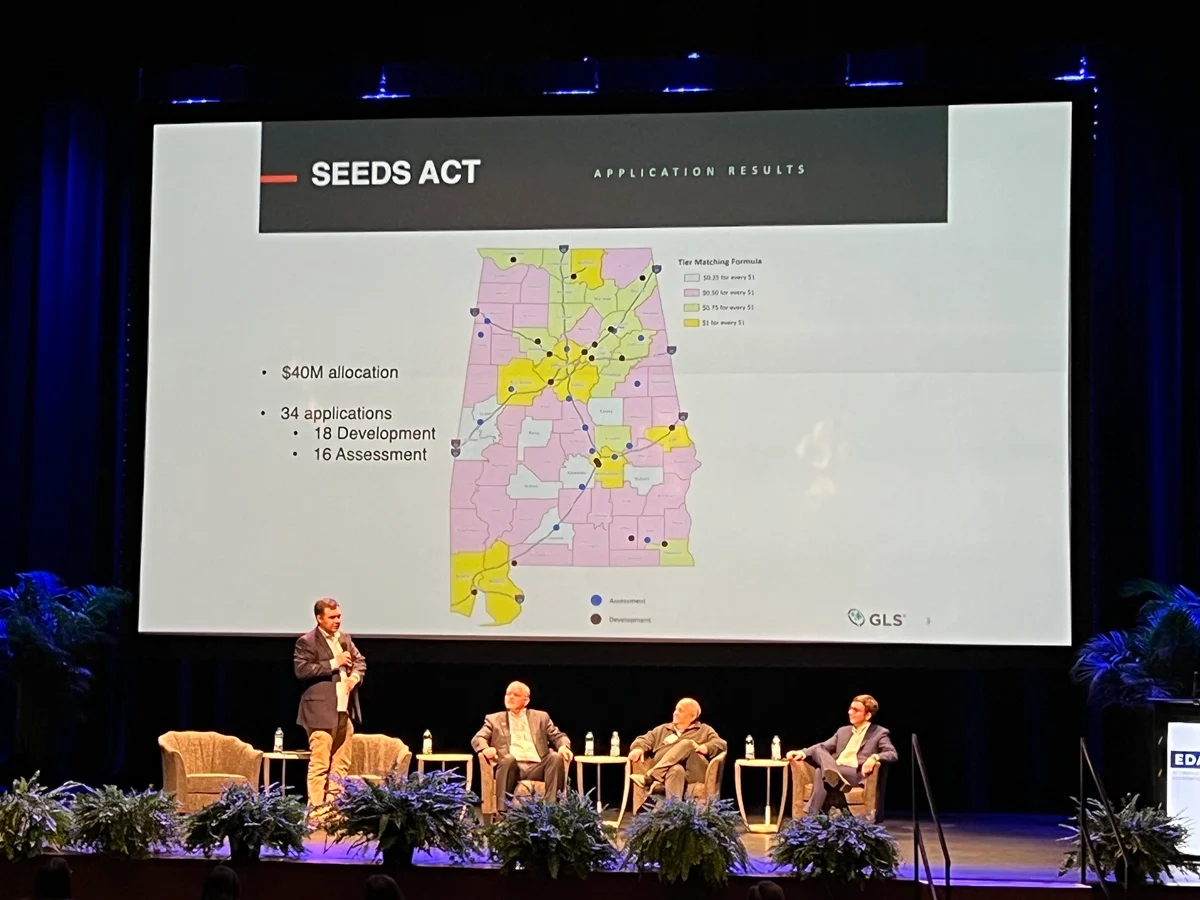
The State Industrial Development Authority (SIDA) is considering 34 properties throughout the state under the new Site Evaluation and Economic Development Strategy (SEEDS) Act – part of the Game Plan economic development legislation approved last year.

Location Strategies (GLS) out of Greenville, South Carolina, to assist in the evaluation process.

The 34 properties consist of 16 being considered for SEEDS site assessment dollars and 18 for SEEDS site development dollars. A pool of $40 million in grants is available with $42 million in requests from applicants, so not all will be approved.

SIDA’s team has chosen 19 of the sites for its initial evaluation in an attempt to maximize the potential for the initial $40 million in grants. The sites are being evaluated for projects that would be capital- or labor-intensive or a blend of both.

Alabama News Center

MLB? Mayor wants women’s professional sports in Nashville

Personally, Mayor Freddie O’Connell may have had his fill of men’s professional sports teams in Nashville.

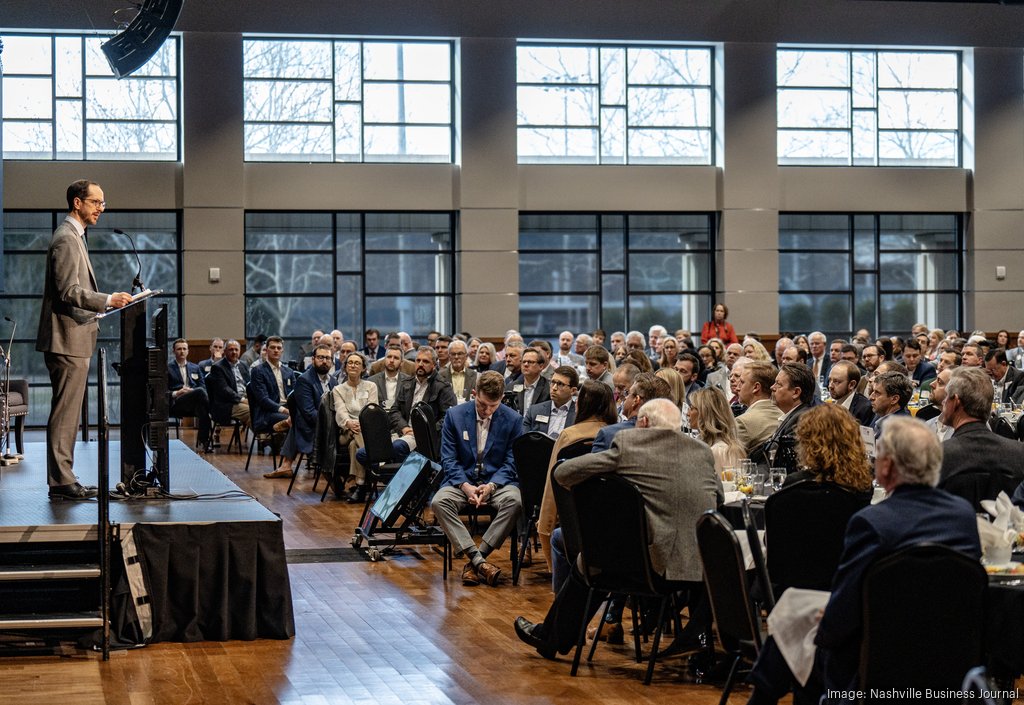
The mayor, speaking to more than 400 businesspeople at the Feb. 8 Nashville Business Breakfast event, called himself “as interested, if not more interested, in ensuring that women’s athletics actually start to take on an important role in the city.”

O’Connell was asked at the event if the city was going to land a Major League Baseball franchise.

“I don’t know, have you met anybody who’s willing to publicly fund a stadium?” O’Connell replied, prompting some laughter in the audience.

For years, a private group has been pursuing such a team and possible stadium site, though it has yet to publicly name a billionaire committed to finance that vision. League Commissioner Rob Manfred said in 2023 that “Nashville’s on everybody’s list” for potential expansion. Jerry Reinsdorf, owner of the Chicago White Sox, sought and received a meeting with O’Connell in December (renderings of a potential new ballpark development in Chicago became public this week).

Nashville Business Journal

A soft landing is in sight for NC Triad region economy, but keep a parachute handy 

The economy is not a sport, and the Triad is not a ballpark, but a sports analogy as North Carolinian as sweet potato pie can sum up the outlook for the region’s economy in 2024: The home runs light up the scoreboard, but winning a pennant depends on racking up base hits and maintaining a strong bench and bullpen.

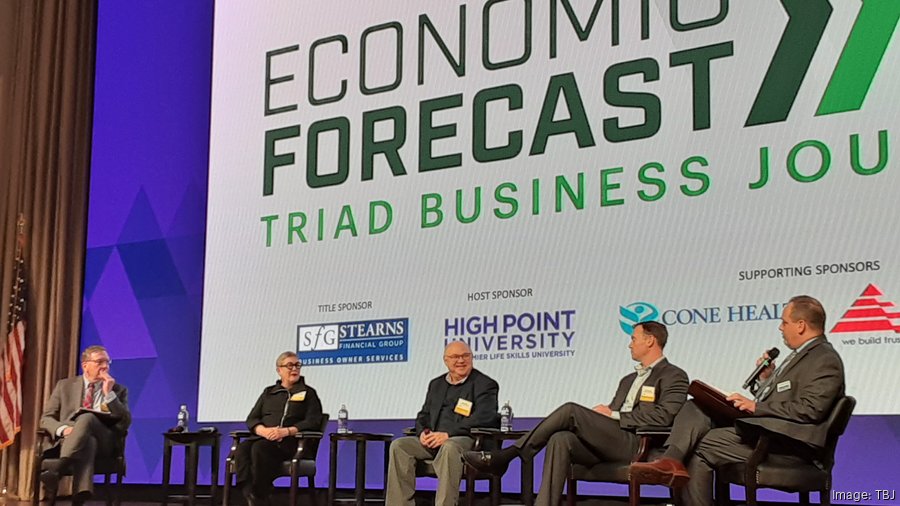
The view from a panel assembled by the Triad Business Journal to assess the economic outlook in 2024: The region is not out of the recession woods but will probably be OK thanks to impending megasite industrial projects and a strong workforce.

Also boosting the Triad’s outlook: The region is less exposed than many to the de facto recession in office real estate and by housing prices that remain relatively affordable — with the “yes, but” that much of the affordability is increasingly away from employment centers and still out of reach of many young people of modest means.

Triad Business Journal

Disney to buy $1.5 billion stake in Cary, N.C.-based Epic Games

Walt Disney Co. announced Wednesday that it would buy a $1.5 billion stake in video game maker Epic Games and expand its relationship with the Cary-based company.

The two companies said they will collaborate on new games and entertainment in a multi-year project.

Disney and Epic have already been collaborating, including in the development of video games such as “Kingdom Hearts 3” and “Star Wars Jedi: Survivor.” They have also worked together in cinematic editing and animation for film and streaming, and in the creation of more than 15 Disney Parks attractions such as “Millennium Falcon: Smugglers Run” at Star Wars: Galaxy’s Edge.

“Disney was one of the first companies to believe in the potential of bringing their worlds together with ours in Fortnite, and they use Unreal Engine across their portfolio,” said Epic Games CEO Tim Sweeney in a statement. “Now we’re collaborating on something entirely new to build a persistent, open and interoperable ecosystem that will bring together the Disney and Fortnite communities.” Business North Carolina

Mack Trucks to expand in Virginia

RICHMOND, VA – Governor Glenn Youngkin announced that Mack Trucks, part of Swedish-based Volvo Group and one of North America’s leading producers of heavy-duty and medium-duty trucks, will invest $14.5 million to expand its Roanoke County manufacturing operation. The company will expand its current production facility by 72,000-square-feet to increase capacity for its medium-duty truck line and an emerging medium-duty electric truck line. The project will create 51 new jobs.

“Mack Trucks’ expansion further strengthens Virginia’s manufacturing industry ecosystem, which is a core focus of the Commonwealth’s economic development strategy,” said Governor Glenn Youngkin. “We are proud that Mack Trucks’ initial investment in a new Roanoke County operation four years ago has yielded a second major investment. This is truly another vote of confidence in Virginia by a global industry leader.”  

VEDP

The story behind the Troy, Alabama, distillery honoring Clyde May’s legacy

An exciting project will be completed soon in Troy, Alabama. The Conecuh Ridge Distillery, which will produce Clyde May’s whiskey, was designed by the architectural team at Luckett & Farley.

“I have been involved in the project from day one,” said Dana Zausch, the project’s distillery design manager. “I was actually hired to work on this project with my experience in distillery work.”

Based in New York, Conecuh Ridge Distillery joined Alabama Gov. Kay Ivey in 2017 to announce its plans to consolidate operations in Troy, near to where its namesake, Clyde May, once produced moonshine whiskey. The company broke ground on the project in 2022.

“We started with a brand that had no home,” Zausch said. “The brand’s roots were in Alabama so its brick-and-mortar roots also needed to be.”

The distillery, which will be located at 111 Braswell St. in Troy, includes an artisan distillery, rack houses, a bottling hub and a tasting center. Reports put the project’s costs at about $13.5 million.

Alabama News Center

New Alabama Commerce secretary recruits heavy hitters for state economic development strategic plan

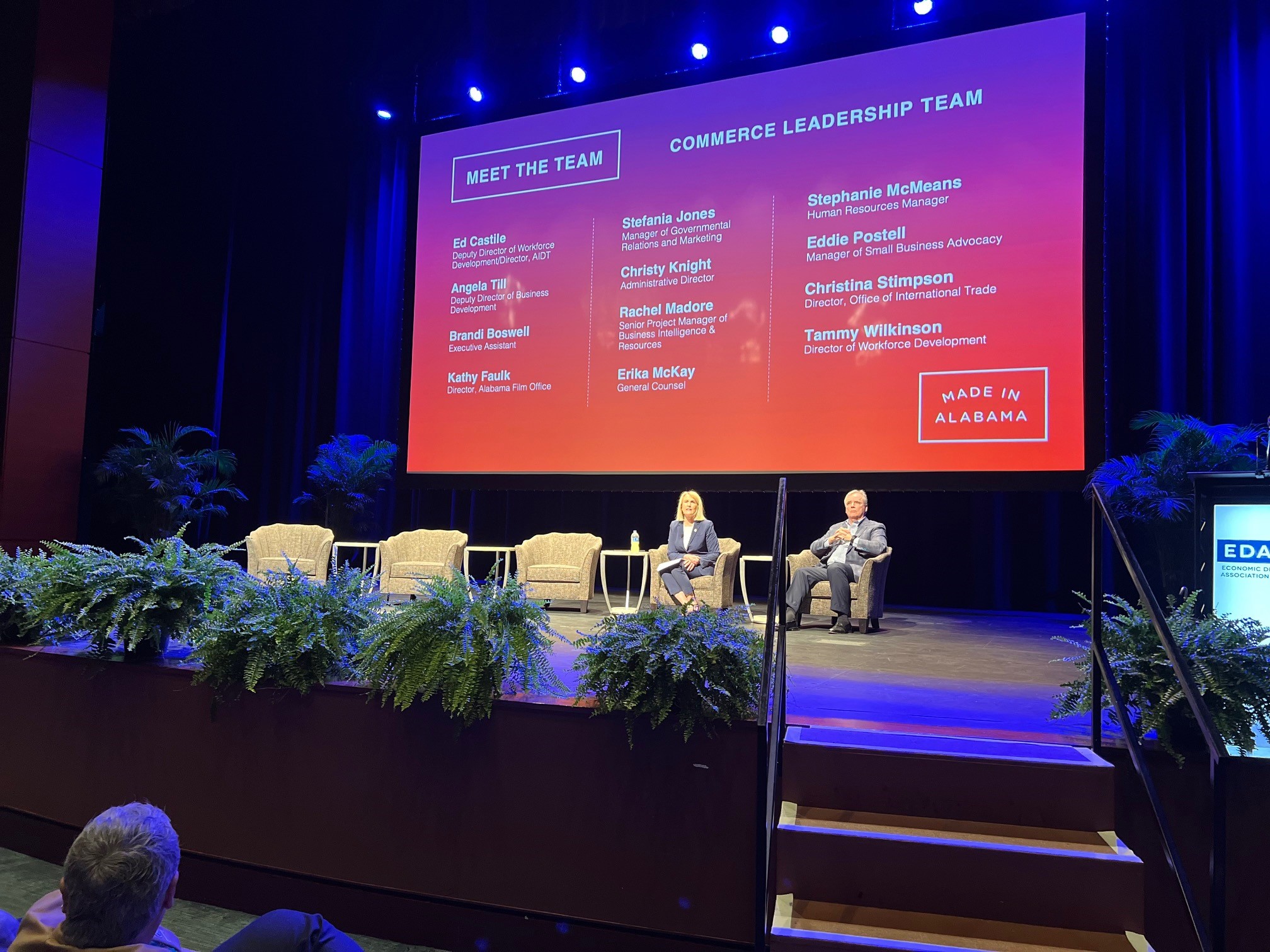
Alabama Commerce Secretary Ellen McNair has been on the job for barely a month but is already at work on a strategic plan that will shape economic development in the state for years to come.

McNair, formerly the chief economic development officer at the Montgomery Area Chamber of Commerce, took the helm at the Alabama Department of Commerce the first of this year. She replaced Greg Canfield, who stepped down as Commerce secretary at the end of 2023 after 12 years in the role.

“Alabama’s been blessed with a lot of great secretaries of Commerce and (Alabama Development Office) directors, but nobody has been more prepared than you to hit the ground running,” Barker told McNair.

McNair has had to hit the ground running, because in appointing her to the role, Alabama Gov. Kay Ivey gave her a specific task.

“When I sat down with Gov. Ivey to talk to her about this position, the one thing she asked me to do was a new strategic plan,” McNair said.

The new strategic plan will guide economic development in the state for the coming years.

Under Canfield’s leadership, Commerce crafted a strategic plan, Accelerate Alabama, that was a huge success by most any measure.

“What we’re hoping to do is be much more comprehensive in this strategy, so not only identifying those targeted industries, but really looking at all facets of economic development and how they work together,” McNair said.

Alabama News Center